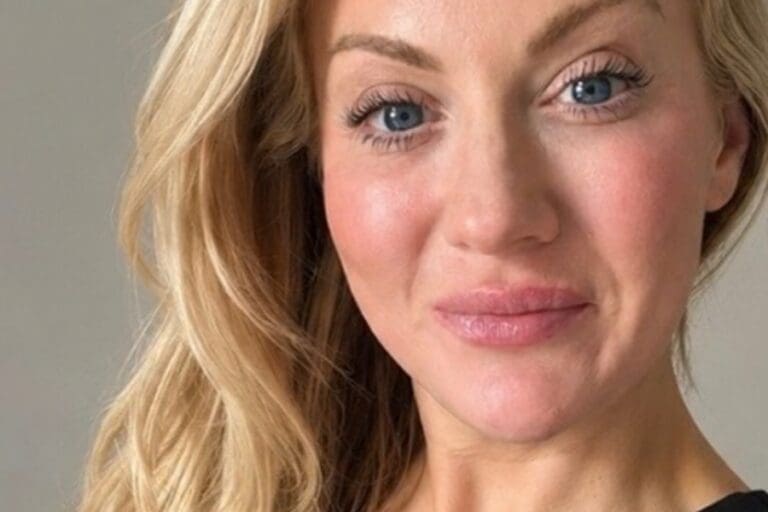

Sarah Dowzell is a second-time founder, investor and operator best known for co-founding Natural HR, the award-winning people management platform built to make HR technology accessible for SMEs.
After becoming an employer at just 21 years old through her cleaning company, Cleaning Team, Sarah launched Natural HR alongside her husband, Jason Dowzell, initially to solve internal operational challenges.
After bootstrapping the business, later raising investment and scaling internationally, Sarah led the company through its acquisition by Moorepay in 2023. Today, she is the co-founder of Learnient, a next-generation people and learning platform built with the long-term in mind from day one.
Passionate about sustainable growth, operational resilience and founder wellbeing, Sarah regularly shares insights on scaling beyond the startup phase, while also building and investing for the longer term through Onyx Ventures Investments.
You became an employer at just 21 and have now founded two successful businesses. Looking back, was this planned and what were the biggest lessons from your first entrepreneurial journey?
Looking back, the biggest lesson was learning how to manage people. At 21, becoming an employer was completely new to me, and I quickly realised there were two sides to it. There was the human side of supporting and leading people (which is challenging for any new manager) but there was also the practical side of being an employer, understanding your responsibilities, payroll, HMRC and everything that comes with employing a team. Those early experiences gave me a foundation that proved invaluable as we grew Natural HR, where we eventually employed more than 127 people over the course of the business.
I also don’t think I could have planned the career I’ve had. I always knew I wanted to build businesses, but I never imagined I’d end up in technology. Natural HR came from trying to solve a problem in my own cleaning business by replacing paper-based HR processes. At the time, I was simply looking for a better way of managing my team. It was only when I realised other small businesses had the same challenge that I saw the opportunity to build a technology business.
That entrepreneurial journey taught me that some of the best business ideas come from solving real problems, and those lessons continue to shape how I’m building Learnient today.
What inspired you to launch Learnient, and how has your experience building Natural HR shaped the way you’re approaching this venture differently?
After exiting Natural HR, we knew we wanted to build in people technology again, but we didn’t want to create another all-in-one HR platform.
The idea for Learnient actually came from my husband, Jason. Through his experience integrating Natural HR with a wide range of learning management systems, he saw first-hand how complex and clunky many of them were. We wanted to create a learning platform that was intuitive to use, integrated seamlessly with HR systems and delivered a much better experience for customers.
We’re also approaching the commercial model differently. Rather than following the traditional per-employee licensing model on a headcount per annum basis, Learnient uses a usage-based approach that better reflects how organisations actually engage with learning platforms.
I’d say the biggest difference is how we’re building the business itself. Natural HR grew organically, and we were often putting structure in place as we scaled. This time, we’ve started with strong governance, thorough documentation and clear processes from day one. Having been through the full lifecycle of building and exiting a business, we’re able to apply those lessons from the outset and build Learnient with the long-term in mind.
Did you (or do you) have a role model in tech or business in general?
I’ve never had one specific role model. Growing up, I loved watching Dragon’s Den, and I was inspired by what those entrepreneurs had built. It wasn’t so much about wanting to be like one particular person, but about seeing people create businesses from the ground up and then go on to build, invest in and own multiple businesses.
That entrepreneurial mindset really resonated with me by being able to use the value created from one business to build another business, and more. I love the idea of a portfolio of businesses and investments that can continue to grow and create opportunities for the future.
What are you most proud of in your career, so far?
Without question, it’s the acquisition of Natural HR.
Once you’ve gone down the route of raising investment, that’s the ultimate goal: to survive in business, continue building it and ultimately have it be acquired. It’s something you work towards over many years, but it’s never guaranteed, which is why reaching that milestone is something I’m incredibly proud of.
When people look back at a business journey, they often see the headline moments, but they don’t see everything that came before it. Building Natural HR took years of resilience, learning and continuous growth.
Learnient has now given us the opportunity to go again, but this time with even more experience and confidence.
What does an average work day look like for you?
It sounds like a cliché, but no two days are ever the same. One day I might be focused on product and commercial discussions at Learnient, and the next I could be looking at investment opportunities or supporting other founders. I also sit on the Birmingham board of The Whole Point, which is a UK-wide government funded initiative to increase funding to women-led businesses. That’s one of the things I enjoy most about what I do.
What has changed compared to my first business is how intentional I am with my time. Earlier in my career, it was all about working as many hours as possible and I was too caught up in the weeds. Now, I recognise that building a successful business is about being able to think much more long-term – decades rather than quarterly and annual targets!
I make time for exercise, try to eat well and prioritise my own wellbeing and most importantly, my family, because my last business journey came at a cost.
Having built and grown businesses over nearly two decades, what qualities do you believe make founders and leadership teams successful over the long term?
For me, resilience is the biggest one. No matter how well you plan, there will always be things you can’t control. Whether that’s the market, customer behaviour or wider economic conditions. The ability to keep moving forward despite those challenges is what makes the difference over the long term.
Alongside that, you have to believe in what you’re building and believe in yourself. Every founder experiences moments of uncertainty, but if you don’t have confidence in your vision, it’s difficult to instil confidence in your team and your investors.
That doesn’t mean you always have the answers. It means being willing to make decisions with the information you have, learn from mistakes and keep adapting. Building a business is rarely a straight line, so resilience, self-belief and the confidence to keep going are qualities I believe every founder and leadership team needs to succeed.
Many founders experience setbacks, self-doubt and difficult decisions. Have there been moments where you’ve questioned yourself, and what helped you move forward?
Absolutely. I don’t think you can build a business without experiencing moments of self-doubt. There are always difficult decisions to make, setbacks you didn’t anticipate and times when things don’t go to plan.
What I’ve learned is not to let those moments define the direction of the business. I always come back to why I started, the long-term vision and the belief that challenges are part of building something meaningful.
Over time, I’ve also realised the importance of having the right people around you. Whether it’s co-founders, mentors or trusted advisors, having people who can challenge your thinking, offer perspective and remind you of how far you’ve come makes a huge difference.
Experience has probably been my biggest confidence builder because every challenge I’ve faced has taught me something, so while difficult decisions never become easy, you become much better equipped to navigate them.
One thing I will say is that you really do just have to keep going!
You speak openly about founder wellbeing and building businesses sustainably. Why do you think this conversation is becoming so important?
I think it’s important to share the reality of entrepreneurship, because it isn’t always as idyllic as it can appear online. We’ve seen a huge increase in people talking about starting businesses and working for themselves, but social media often shows the highlights and not the full picture of what it takes to build and run a company.
When we built Natural HR, I went all in on the business and, at times, it consumed my life. That’s something many founders experience, but people don’t always see that side of it. The reality is that building a successful business requires a huge amount of commitment, and while I can look back and say it worked, I can also see the impact it had on other areas of my life, including my health. Building Learnient the second time around, I have the experience and knowledge to do it again, but I’m much more conscious of looking after myself alongside building the business. I want my whole life to be successful, not just one area of it.
At the same time, I think we’re seeing a much bigger focus on health and wellbeing, particularly online. People are more conscious of exercise, nutrition and mental wellbeing than they were a decade ago, and I think that’s a really positive shift. For me, founder wellbeing isn’t separate from business success. If you want to build a sustainable business over the long term, you have to build it in a way that’s sustainable for yourself too.
What advice would you give to aspiring entrepreneurs (particularly women) who want to build businesses designed for long-term success rather than just rapid growth?
Start with your “why”. Before you think about growth, funding or scaling, be clear on why you’re building the business in the first place, because that purpose will help guide you through the inevitable challenges along the way.
I’d also encourage people to focus on the long term. We often celebrate overnight success, but the reality is that building a successful business takes years. You’re unlikely to see the results of your hard work instantly, so it’s important to be patient and keep moving forward, even when progress feels slow.
Finally, believe in yourself. There will always be moments where you question whether you’re making the right decisions, but confidence grows through experience. If you keep your end goal in mind, stay resilient and continue learning along the way, you’ll give yourself the best chance of building something that lasts.