
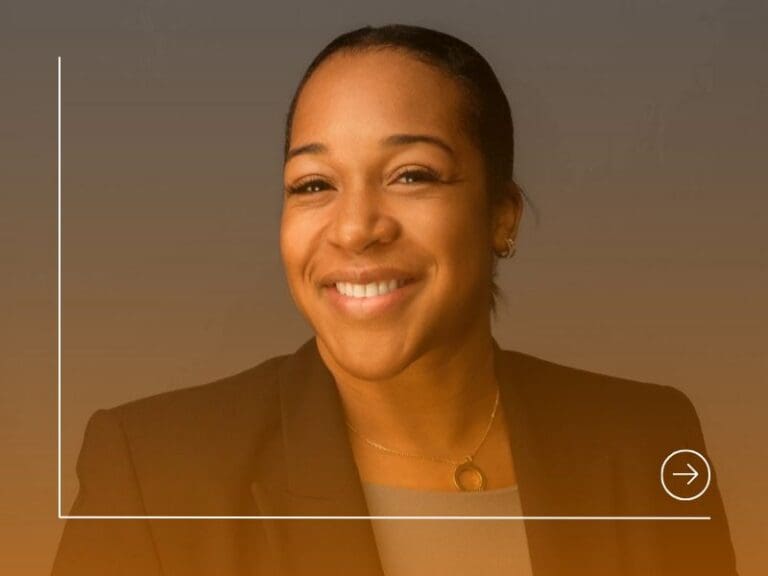
Christina Francis is Head of Northern Europe & UKI at Asana, where she leads sales across the region and oversees a team of around 100 people.
With nearly two decades of experience in sales and ten years in senior leadership roles in tech, Christina has focused her career on building high-performing teams and creating environments where people can thrive.
She is passionate about making the tech industry more inclusive and creating greater opportunities for women and Black professionals. As a working mother and leader, Christina also speaks and writes openly about navigating ambition, leadership and parenthood, and the structural challenges women can face along the way.
For Christina, leadership is about more than achieving commercial results. It means using your position to open doors for others, challenging the status quo and helping more people see that they belong and can succeed in tech.
How did you land your current role? Was it planned?
My current role at Asana was actually quite intentional. I had been thinking about a move, I had not too long finished maternity leave so my priorities had changed. This is not uncommon for women returning on maternity leaves, you think about things like commute times, flexibility, work load, travel requirements, etc. So I wanted to now be in a role that complemented my shift in home life.
The type of company I was looking for was key vs the compensation package. Which changes, in my earlier days it was more about the comp, now it was more about the environment I’d be in, the product that was being offered to market, and people I’d work with. I remember in the interview process I got to speak to so many people, and it really helped me to get an idea of where I’d be working.
Asana had been mentioned to me by a customer, so I had done some research. I actually was fortunate to have had 2 offers on the table at the time, and I went for Asana and it’s still paying off.
If you’re navigating a return or a pivot, my advice is simple: get clear on what you’re optimising for before you start the process. The offer that looks best on paper isn’t always the right one.
Did you (or do you) have a role model in tech or business in general?
My sister is also in tech sales, and we’re both in leadership. She started her career before me and is one of my mentors, and we bounce ideas off each other. We often talk about strategy together (not on weekends!), but she has definitely been influential in some of the decisions I’ve made.
Another important role model was a previous sales manager who sat me down one day and told me I’d make a good sales leader. He saw leadership skills in me before I saw them in myself, and that conversation helped set me on the path to leadership.
Are there any specific skills or traits that you notice companies look for when you’re searching for roles in your field?
I often hear a lot of people say, “I want to be a manager” or “I want to be a leader,” and I always ask them why.
For some people, the key motivator is that becoming a manager feels like the natural next step or an opportunity to earn more. But people who genuinely want to be people managers and leaders are interested in developing others and working on strategies that help people excel and grow.
Those are the skills I think are most important when someone says, “I want to be a manager,” because you’re no longer responsible only for what you do in sales and the deals you close. Instead, you have to consider: How do you make your team better? How do you help your team become the ones closing deals?
It requires a real interest in and passion for developing people – to coach, mentor, guide and provide support. That’s an entirely different skill set from simply being the top performer and closing deals yourself. I think people should be really clear about why they want to become a manager.
What does an average work day look like for you?
No two days look the same, which is exactly how I like it. As a second-line leader I manage managers, so my job is less about deals and more about people, decisions, and direction.
My mornings usually start with the numbers, pipeline, forecast, team performance, so I know where I need to focus. From there it’s a mix of 1:1s with my directs, cross-functional alignment, and customer time. I also spend real time on strategy and where we are going, what’s blocking us, and what we need to build.
What I genuinely love is the range. No day is just one thing.
I’m also always thinking about where AI can help with work such as forecasting, pipeline reviews and market analysis. That creates more time for the people-oriented parts of my role, whether that’s having conversations with my team or building relationships with customers.
What are you most proud of in your career, so far?
I would say the career pivot. It’s never easy pivoting into a new field. I remember talking to my sister after I got the interview. I looked at the detailed job specification and thought, “I don’t meet all of these requirements, so I may as well save myself the embarrassment and pull out.” But lo and behold, I got the job!
I was able to recognise my impostor syndrome and self-doubt and think, “Do you know what? I’ve got nothing to lose. I’m going to go for it.” I was prepared and confident in the skills I could bring.
That decision opened up a completely different set of opportunities for me. I’m proud that I made the pivot because it’s easy to become cautious and talk yourself out of making that bold move.
Entering the world of work can be daunting. Do you have any words of advice for anyone feeling overwhelmed?
Build your network, and remember that feeling uncomfortable can sometimes be a good thing. Entering the world of work can be overwhelming, so find a safe space in your network, particularly with people who have similar backgrounds and experiences. Don’t be afraid to ask for help or share that you’re feeling overwhelmed. You’ll be surprised how many people feel (or have felt) exactly the same way.
What advice would you give other women wanting to reach their career goals in technology?
Women are still underrepresented in tech, but that should never put anyone off. Look at your transferable skills and think about how they could be applied to different roles. If you identify gaps, find ways to fill them – do the learning, get the training and find a mentor.
Don’t limit yourself just because you don’t think you meet 100% of the job requirements. Go for it, believe in the skills that you have, and think about how they can transfer into the role or space you’re trying to break into. It sounds so cliché, but you have to really believe in yourself. You are your biggest asset.
The industry needs more women in tech, so don’t count yourself out before you’ve even applied.