

N Brown Career Journeys
Can you talk us through your career journey so far?
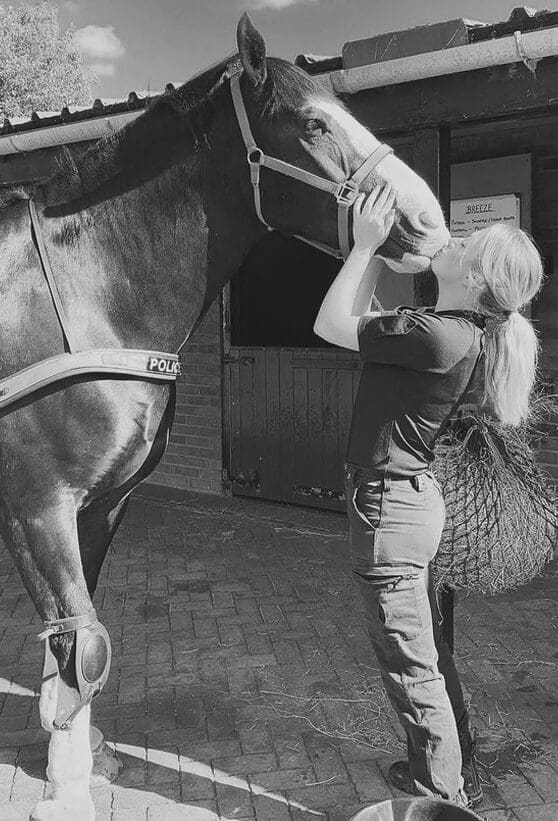
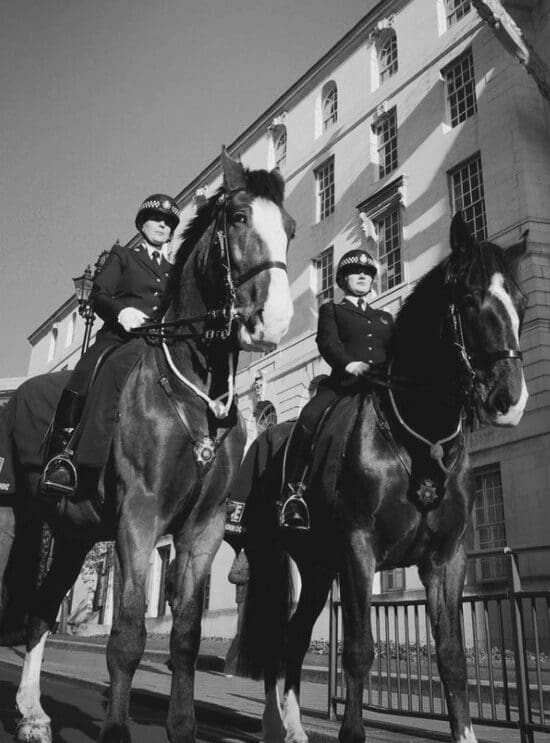
I started my career as a front-line Police Officer far more years ago than I care to remember, and somehow managed to stay out of trouble and stick with West Yorkshire Police for the best part of two decades. Over this time, I progressed through various roles which led me to specialising in the Mounted Section obtaining my Mounted PSU Commanders qualification.
The early years were all about learning the fundamentals, responding to incidents, understanding the community, working shift patterns that consumed most of my adult life. Then onto the horses as Mounted PSU Commander, I was responsible for planning and coordinating operations across public order events, football matches, ceremonial events and large-scale public gatherings. It was demanding, high stakes work that required constant decision making, meticulous planning, and the ability to lead people through genuinely pressurised situations, but most of all so much fun and such an honour! I can honestly say I worked with the most amazing team of both the four and two legged variety.
But then the turning point came when my priorities shifted, my son was born and my husband became sick, and I realised I couldn’t keep giving 100% to a career that demanded shift work and round- the clock availability if I wanted to actually be present as a mum and wife. That’s where my jump into corporate life began, I already had an interest in Agile ways of working and implemented this into my work in the Police.
I formalised this and gained qualifications for my CV, and started an ILM Level 5 in Coaching & Mentoring. I still keep the learning going in the background to keep me as up to date as possible. But honestly, the real challenge and steep learning curve has been in understanding how to translate what I already knew into a new environment, and keeping my confidence high when I wobbled.
How did you come to join N Brown and find your way into your current role?
My journey to N Brown has been a bit of a winding road, and it’s a good reminder that sometimes the best opportunities come after a few false starts. I interviewed for a Delivery Manager role at N Brown straight out of policing, and I was offered the job, but with one thing and another it never came to be. And instead I went to Instanda as a Scrum Master to build my foundational knowledge in agile ways of working from the ground up.
Six months into the Instanda role, I got a call from the Agile coaching team at N Brown. They were working on the agile enterprise transformation and asked if I’d be interested in joining them as an Agile Coach. What attracted me was the chance to work at scale with multiple squads and genuinely embed agile thinking into the organisation.
Did you always have a clear idea of what you wanted to do and a plan to get there, or has your career path evolved along the way?
Absolutely not, and that’s probably the biggest realisation I’ve had. When I started in policing, I had a clear trajectory- it was linear and predictable – which those who know me, describes me to a tee. Corporate working in any way, let alone tech, was not on my radar, and if I’m honest, my answer to any tech problem was turn it off and back on and hope for the best!
What changed were my circumstances – life happened and my priorities shifted and I needed a career that allowed me to progress and stay challenged, but also one that offered flexibility around working patterns. I didn’t have a detailed roadmap for my transition into tech, I did what I feel like I have always done; listen well, be a sponge and be very willing to learn and make mistakes.
In practice, this meant being open to opportunities as they came up, the Scrum Master role at Instanda, the Agile Coach offer at N Brown, and then the Delivery Manager position within New Web. Each step built on the previous one, rather than following a predetermined plan. I’d say the best career moves have come from recognising when circumstances changed and being flexible enough to adapt, rather than rigidly sticking to a plan that no longer fit.
What skills or experiences from earlier in your career have you found yourself using in your current role?
The obvious one is planning and resource management. I spent years coordinating complex operations with multiple moving parts, tight timescales, and high stakes – that transfers directly to sprint planning and release management. But the less obvious skills are probably more valuable.
Reading a room is a huge one. In policing, you had to assess situations quickly – and that same skill applies in delivery: understanding team dynamics, spotting when someone’s struggling or disengaged, knowing when to push and when to step back. It’s made me a better coach and a better manager.
Decision-making with incomplete information is another. In policing, you rarely had perfect information, but decisions couldn’t wait. In tech delivery, that happens all the time, decisions about priorities, scope, resourcing. You’re never going to have complete information. The ability to be decisive even when things are uncertain has been invaluable.
Communication is the third big one. Briefing officers before an operation meant being crystal clear about what was expected, what could change, and what contingencies were already in place if/when things went sideways. That same clarity is exactly what teams need when you’re explaining a sprint goal or explaining why priorities have shifted. Still working on this one if I’m honest, as my squads will tell you, I do love to whitter on.
Was there a career move or decision that felt like a risk at the time, but ultimately paid off – or didn’t quite work out as you’d hoped?
This whole career change felt like and was a huge risk to me at the time. The financial risk was real, I was giving up a pension I’d built up over twenty years, a stable salary and no risk of redundancy or being laid off, and moving into an industry with no track record on my CV. The ego risk was real, going from everyone knowing I was a good grafter with integrity to building up my reputation. Starting again was hard, but yes, it absolutely paid off.
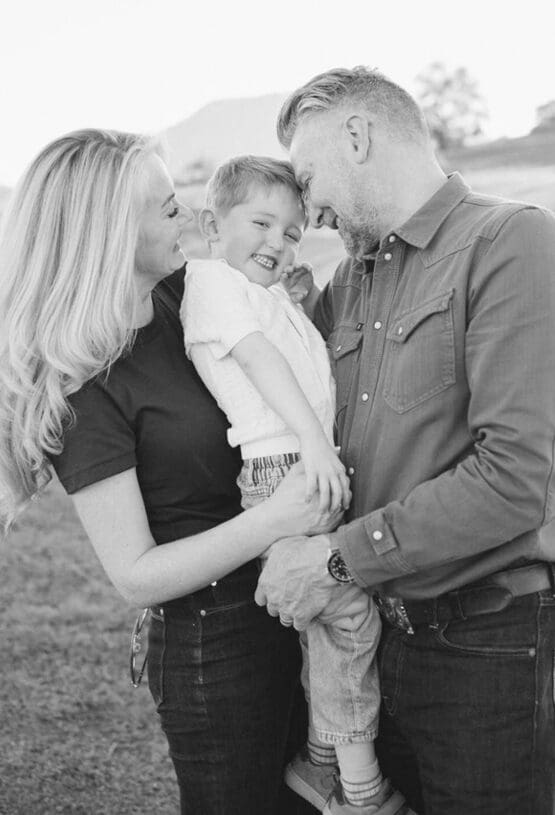
If anything, moving into tech has accelerated my career in ways I didn’t anticipate, the leadership skills I had translated directly. My quality of life is immeasurably better; I can do the nursery and school run and bedtime and not have to choose one or at worst, none. My family, our wellbeing and presence in my son’s life, has paid off in ways that go beyond career progression.
What’s something your career journey has taught you that you didn’t expect good or bad?
The biggest unexpected lesson is that career progression isn’t linear. I spent twenty years in an organisation where progression was methodical and hierarchical. The idea of moving sideways, changing direction entirely, or progressing in a non-traditional way felt chaotic to me. But actually, that kind of flexibility is a superpower. It means you’re not trapped by one organisation’s structure or one industry’s expectations.
I’ve also learned that “soft” skills are actually the hardest and most valuable skills to develop. The things that actually make me effective as a leader and as a coach are the things that are hardest to teach: how to read people, how to communicate clearly under pressure, how to know when to be directive and when to step back.
Those things come from experience, from making mistakes, from paying attention. And they don’t expire when you move industries. On a more personal level, I’ve learned that prioritising what matters outside of work isn’t a career liability; it’s a career essential. The assumption in traditional careers is that ambition means sacrifice: you climb the ladder by giving everything to your job. But I’ve found the opposite to be true. When I made the choice to prioritise my family, it actually made me more effective at work because I was less burnt out and more present in the moments I was actually at work.
What advice would you give to someone who feels like their career isn’t following a traditional path, or who is thinking about making a change?
I always refer back to something a now dear friend who trained me to ride the police horses said, “I can teach you how to ride a horse, but I can’t teach you how to be a good cop, that comes from experience and wool on your back”.
So you can learn a new skill if you want it enough, but your experiences and how they translate are what really matter. I don’t think there is such a thing as a traditional path anymore, all life experience translates into skills you can use in your day-to-day work.