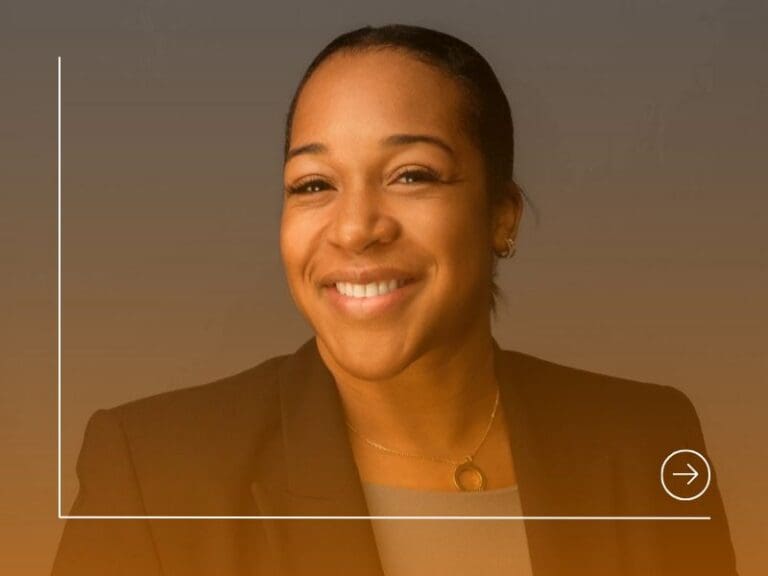


Kate Shen went to high school in New Jersey, and CMU for college, where she majored in computer science, with an additional major in business administration.
After that, Kate worked as program manager at Microsoft, Hulu, Xiaomi (the Asian phone manufacturer). Now, she is working on building a global data supply chain for physical AI.
How did you land your current role? Was it planned?
AI infrastructure is primarily driven by two critical pillars: chips and data. However, data is emerging as the ultimate differentiator. This pivotal realisation was shared by a close-knit group of CMU classmates/friends and former colleagues working in AI, leading us to join forces and build the next frontier of critical infrastructure – the data foundation for physical AI. This shared vision united our co-founders, with some of them even becoming our early investors.
What are the key roles in your field of work, and why did you choose your current expertise?
Building robust AI data infrastructure requires several critical components working together. That includes the ability to continuously collect large-scale datasets across a wide range of real-world scenarios, backend systems capable of processing data at petabyte scale, and expert annotation to validate and interpret data accurately across different environments. It also requires a strong global compliance framework to navigate cross-regional regulations, particularly around personal data.
My work sits at the centre of these workflows, specifically focusing on orchestrating the data supply chain and spearheading our global compliance efforts. I view compliance as far more than a checkbox. It’s the non-negotiable foundation of our infrastructure; without a rigorous framework, ethical and legal data collection at this scale cannot exist.
Did you (or do you) have a role model in tech or business in general?
Paul Volcker. He is best known for his two terms as Chairman of the U.S. Federal Reserve from 1979 to 1987, where he successfully ended a period of high inflation. He exemplified the importance of maintaining an objective, steadfast perspective on the core problem, remaining undeterred by mainstream opinions, financial distractions, or external noise. His ability to relentlessly pursue the right direction, despite the immense pressure to conform, is a rare quality that is far easier to admire than it is to practice.
What are you most proud of in your career, so far?
The single greatest source of pride is successfully assembling our current team of world-class experts and securing decisive industry validation for our initial strategic projections.
What does an average work day look like for you?
As part of the data pipeline team, much of my time is spent travelling internationally to engage with partners. Crucially, I am also responsible for spearheading our compliance efforts, which requires nearly daily consultation with legal counsel across the US, EU, Asia and Africa.
Are there any specific skills or traits that you notice companies look for when you’re searching for roles in your field?
Beyond the necessary day-to-day skills, the AI and robotics industries are evolving at an unprecedented rate, making the ability to rapidly synthesise critical information and maintain strategic foresight – planning many steps ahead – essential for long-term survival and success in this field.
Has anyone ever tried to stop you from learning and developing in your professional life, or have you found the tech sector supportive?
The tech sector has been incredibly supportive. I feel fortunate that many of my CMU classmates, alumni, and former colleagues have become lifelong friends and advocates. When we were defining our company’s strategic direction, we engaged in deep discussions with this network – ranging from AI faculty and engineers to robotics lab leads and researchers at prominent venture funds. Their insights were invaluable, so much so that when we finally launched, many joined our core team, while others became our earliest investors.
Have you ever faced insecurities and anxieties during your career, and how did you overcome them?
Absolutely. Insecurities and anxieties are a natural part of any career journey. I’ve found that the most effective way to overcome them is through movement – taking action, no matter how small, rather than dwelling on fear. Fear thrives on stagnation and imagination. Once you start taking steps, you break its power.
It’s also essential to ground your worries in reality. Researchers have found that a vast majority of our fears are unfounded – one study from Cornell University suggested that 85% of the things people worry about never actually happen. Even when worries do materialise, about 79% of people discover they can handle the difficulty better than expected or that the experience taught them a valuable lesson. This truth should serve as motivation to stop letting an anxious mind punish you with exaggerations and simply focus on the next step forward.
Entering the world of work can be daunting. Do you have any words of advice for anyone feeling overwhelmed?
When you do feel overwhelmed, try to ensure it isn’t stemming from being overly self-critical. I feel that women are more likely to intuitively blame themselves. Remember that even the world’s greatest military leaders felt overwhelmed during World War II, and many had to rely on medication to cope. Sometimes, simply accepting the feeling itself can make things better.
What advice would you give other women wanting to reach their career goals in technology?
One idea that has shaped my thinking is Charlie Munger’s concept of a “latticework of mental models”, which is really about building systems for how you think rather than focusing only on individual career milestones. I think that approach is especially valuable in technology, where industries and roles evolve so quickly.
For me, that means constantly learning across different disciplines rather than staying narrowly focused within one area. Some of the most useful perspectives in technology come from outside technology itself, whether that’s psychology, economics, or physics. I also think it’s important to think backwards sometimes and identify where things could fail before deciding how to move forward. Alongside that, I rely heavily on structured routines and checklists to make decisions consistently, particularly in fast-moving environments.
Most importantly, understand your own circle of competence and be honest about where your expertise genuinely sits. Technology moves quickly, and there can be pressure to speak on everything. Long-term credibility comes from knowing where you can confidently assess risk, make decisions, and add real value.