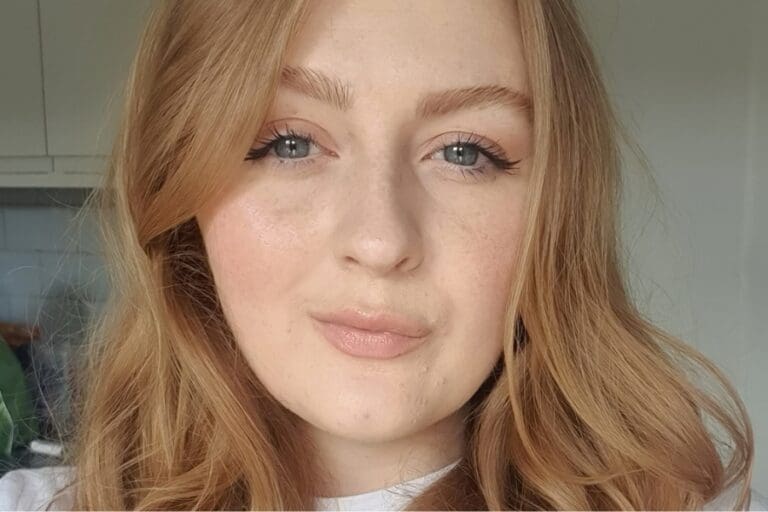


Julie Pons is Chief Product Officer at ZOE, where she leads the strategy behind the ZOE app, translating world leading science into an intuitive app designed to help you make better food choices.
Julie’s background spans consumer behaviour, people leadership, strategy consulting at BCG, and senior roles at Klarna, giving her a human-centred approach to building health and wellbeing tech.
How did you land your current role? Was it planned?
At ZOE, I joined the people team in 2023, but later transitioned to Chief Product Officer in 2024. While completely unplanned, it was a natural fit. Throughout my career, from strategy consulting to consumer behaviour, my constant thread has always been understanding what drives people so I can build things that truly matter. ZOE bridges the gap between world-leading gut health science and long-term habits through our app. Initially, I focused on building our tech teams and organisational design. However, as ZOE evolved, we realised that while our app was scientifically brilliant, we needed to better support our members to sustain healthier choices around their food . These are hard changes that are very driven by psychology and we wanted to do this in a positive and empowering way, contrary to calorie counting myths and the shame and guilt that comes with endless dieting. ZOE’s co-founder and CEO Jonathan Wolf asked me to step in and help solve that problem. I love a new challenge, so it felt natural to give it a try. Now, the ZOE app is better than ever, with exciting new features that empower people to make meaningful changes that stick in the long term to improve their health and wellbeing.
What are the key roles in your field of work, and why did you choose your current expertise?
Product sits at the intersection of engineering, design, science, data, and marketing. Its role is to unite these disciplines around one question: what problem are we solving for our members, and how do we make it genuinely matter? I gravitated towards product because it feeds my endless curiosity. One day you’re diving into user psychology, the next it’s data science, business strategy, or technology. Early in my career, I was told tech wasn’t for me because I didn’t have a technical background. I now know that my ability to learn fast, ability to understand our users and build great experiences for them are what make a great product leader.
Did you or do you have a role model in tech or business in general?
I’ve never really had one single role model. I’ve tended to collect things I admire from different people I’ve worked closely with. Some have extraordinary clarity of thinking, some are incredible leaders, others have huge amounts of courage.
I’m often more inspired by people I’ve worked with directly than by famous tech leaders. Watching someone navigate a hard decision, build something from scratch, or create an environment where others do their best work – that’s taught me more than anything else. And frankly, some of my biggest lessons have actually come from making mistakes.
What are you most proud of in your career, so far?
At ZOE, helping to rethink our product around behaviour change and human psychology was a huge moment. We shifted from asking, “how do we communicate great science?” to “how do we help people actually change?” Given how deeply ingrained our habits around food are, that felt like a really meaningful shift to be part of. Our goal is to reduce confusion around food, especially ultra-processed foods, which now make up around 60% of our diets.
Our AI features such as ZOE’s ultra-processed food scanner in the app enables you to scan a barcode on a product to find out how that food’s processing might impact your health. It takes into account not all ultra- processed foods are made equal and we want to help people better understand what is in their food and make more informed choices without fear or judgement. ZOE’s app also has a photo logging feature, so you can just snap a picture of your meal, log it in seconds, and track things like plant diversity count and fibre over the week – we recommend reaching 30 different plants weekly. It’s powered by the world’s first validated food photo logging tool and the accuracy is really quite impressive. I’m incredibly proud of what we’re building technically and culturally.
ZOE is featured in The Ones to Watch: AI 100 Report, a major new report by Barclays spotlighting 100 of the UK’s AI driven scaleups shaping the future.
31% of our technical roles at ZOE are held by women, well above the industry average. And we’re hosting our first-ever ZOE Women in Tech Hackathon in London this July, and that feels like a real statement of intent.
What does an average work day look like for you?
There genuinely is no average day! And I love that. Some days I’m deep in product reviews, helping our teams to think carefully about what we’re building and why. Some days I’m literally sketching with the teams. I like being quite hands on and solving problems together. Other days I’m talking to our members, understanding their experiences, and coupling that with what data our analytics team has pulled together.
People sometimes imagine leadership becomes less hands-on over time, but to me it doesn’t. I see my role as creating clarity for everyone across the teams, and I don’t think you can do that from a distance.
Are there any specific skills or traits that you notice companies look for when you’re searching for roles in your field?
People often assume technical expertise is the main thing, and while it’s a real advantage, I think curiosity matters more. The people who stand out tend to ask good questions, learn quickly, and are genuinely comfortable changing their minds when they learn something new.
Empathy is also very important, because building products isn’t just about features, it’s about understanding people.
And then there’s resilience. Building anything worthwhile involves real uncertainty and plenty of things not working, and if you can’t sit with that, it’s a tough field to be in. These are exactly the kinds of qualities we look for at ZOE – and honestly, they’re qualities I see in abundance in people who are told they’re “not technical enough.” That narrative needs to change.
Has anyone ever tried to stop you from learning and developing in your professional life, or have you found the tech sector supportive?
I’ve been very lucky to work with people who encouraged my growth and genuinely believed in me, but I’ve also encountered plenty of moments where people put me in a box because I wasn’t an engineer, and I hadn’t done product before. Sometimes, people decide who they think you are based on your current title or background, and it can feel like a constant battle to prove I could do more than what my CV suggested
I started in lots of different fields and moved around quite a bit, and that looked unconventional to a lot of people. But I’ve increasingly realised careers don’t need to be linear. Some of the things that felt disconnected at the time have turned out to be the most useful experiences later. And now, as CPO at ZOE, that experience is a big part of why diversity in tech matters so much to me.
Have you ever faced insecurities and anxieties during your career, and how did you overcome them?
Absolutely and I think almost everyone does, even though we don’t always talk about it. I’ve definitely had moments of thinking: am I the right person for this? Would someone else do it better? Do I know enough? Am I actually ready? And when you’ve been told early on that you don’t fit the mould, those doubts can feel even louder.
What I’ve come to realise is that feeling uncertain is just part of the deal. If you’re stretching yourself to learn new things, you’re always going to be bad before you’re good at something. I also stopped assuming everyone else had it all figured out. The more people I met, the more I realised most of them were asking themselves exactly the same questions internally and that was oddly reassuring.
Entering the world of work can be daunting. Do you have any words of advice for anyone feeling overwhelmed?
I think we do a really poor job as an industry of showing people what work actually looks like from the inside, so everyone arrives expecting to have it all figured out, and then feels like something’s wrong with them when they don’t. Everyone is figuring it out as they go, including the people who look the most confident in the room.
The thing that helped me most was focusing less on having the right answers and more on asking good questions. Nobody expects you to know everything when you’re starting out, but curiosity, a willingness to learn, and showing up genuinely engaged will take you incredibly far. And be kind to yourself in those early moments of not knowing.
What advice would you give other women wanting to reach their career goals in technology?
Trust your instincts. There will always be someone questioning if you belong or if you’ve got the right background, no matter what you’ve done before. If you wait until you feel 100% ready, you’ll wait forever. The most pivotal moments in my career happened when I said yes before I was fully prepared, and then did the work to figure it out along the way.
Beyond that, never underestimate your network. Invest in genuine relationships with people who challenge you, believe in you, and open doors you didn’t know existed. Lifting each other up is exactly why we are hosting ZOE’s first Women in Tech Hackathon in London this July. We want to create a community where the next generation can build, connect, and see clearly that there is absolutely a place for them in this industry.