
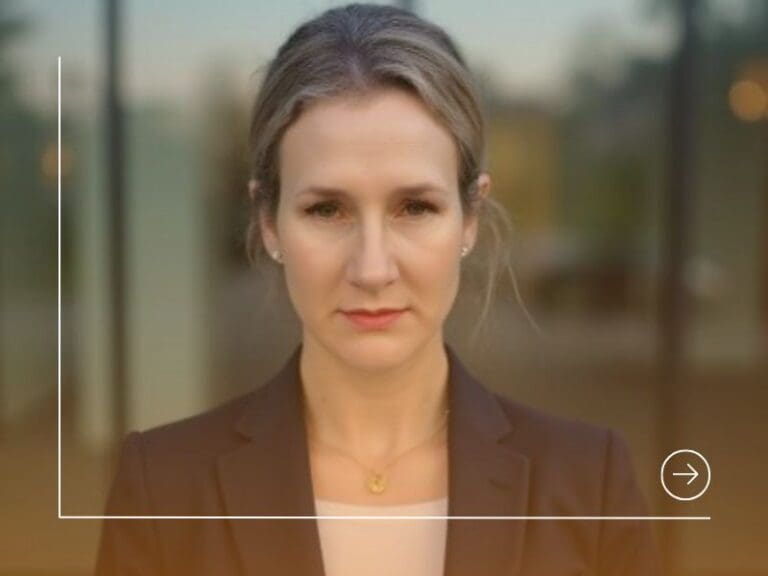
Jane Smith is a former Chief Data Officer turned Field Chief Data & AI Officer (EMEA) at ThoughtSpot, using her experience of productionising AI to help companies move from AI PowerPoint to AI in production.
With 20 years experience at the cutting edge of data (AI, GenAI, ML) Jane has led teams to build revenue generating data products, scaled governance in regulated environments and led 45+ person teams through the disruptive, messy human side of transformation.
How did you land your current role? Was it planned?
I’ve been at ThoughtSpot since May 2025. Before then, I was in the market for a new role, ideally a Chief Data Officer somewhere. It was during my search when I met my now manager Cindi Howson (current Chief Data and AI Strategy Officer at ThoughtSpot). Cindi is a legendary figure in the world of Data and AI, she advises CDOs and CDAIOs at some of the world’s biggest companies. She also writes and speaks about data at forums like Davos, MIT and others. I knew once we connected that I wanted to work with her at ThoughtSpot.
What are the key roles in your field of work, and why did you choose your current expertise?
Most commonly you’d see ‘Chief Data Officers, Chief AI Officers or Chief Product Officers’ within this field. AI is the defining transformation of our era and it’s rapidly evolving. Businesses, governments, hospitals, any kind of organisation you can think of runs on data and AI. This field of work is just as important to humans and society as energy or transport. So, when choosing my current expertise, I knew I wanted to not only lead it but shape that defining tech.
Did you (or do you) have a role model in tech or business in general?
I’m very lucky to have a manager that fits this description. As mentioned, Cindi Howson is an incredibly respected thought leader and a pioneer in the data and AI space. Known for her ground breaking work on semantic ontologies (essentially the layer that translates data into meaning and the foundation for how to deploy AI). I’m thrilled to work alongside her and learn from her everyday.
What are you most proud of in your career, so far?
Being able to say that I’ve been a Chief Data Officer at two different companies. The first time I led a strategy to productionise AI in the early days of Gen AI into the company I worked at, still a very new and unknown technology. At ThoughtSpot I’m proud to have influenced AI strategy and AI products at some of the biggest companies in Europe from life sciences to professional services to automotive.
What does an average work day look like for you?
Most days will involve talking to our customers and advising them. Helping them think through all the various elements of how to establish AI safely and effectively in their companies. I also spend quite a lot of time writing for different publications and speaking at industry events. Just this week I spoke about AI at an insurance conference in Salt Lake City, and earlier this year I was in Dubai to speak at an automotive conference.
Are there any specific skills or traits that you notice companies look for when you’re searching for roles in your field?
Increasingly it’s the ability to work in uncertainty. This space is evolving so quickly that coding languages, skills and capabilities become outdated so quickly. Being flexible and able to adapt your existing skills to new roles as they form in real-time is something I’m always looking for. That and the endeavour to be myself.
Has anyone ever tried to stop you from learning and developing in your professional life, or have you found the tech sector supportive?
Not explicitly. What I’ve found is that people can get very comfortable with you (and dependent on you) in a particular role then be reluctant to support you out of it. Many senior engineers will struggle in the move from senior engineer to staff, as it requires a whole new set of skills to learn that tend to be more business and people-centred. Plus, no-one wants to lose a good senior engineer! I’ve found that you sometimes have to create momentum to develop your own professional life.
Have you ever faced insecurities and anxieties during your career, and how did you overcome them?
Through many crises of confidence over the years I always come back to the idea that no one has it all figured out. We’re all doing our best and experiencing these anxieties is a necessary part of having a big, interesting and fulfilling career.
Entering the world of work can be daunting. Do you have any words of advice for anyone feeling overwhelmed?
You don’t have to do any of it alone. Start to build your network now, and make the effort to stay in touch with your people. Help them out and ask them for help when you need it. Networking is a superpower and you need zero skills or qualifications to build one.
What advice would you give other women wanting to reach their career goals in technology?
Stay flexible and adaptable. This world changes daily, so if you pin yourself to being an excellent fine tuner of models or a super star python writer, you might find it harder to evolve. I’m the biggest advocate for showing up willing to step into new roles as they come.