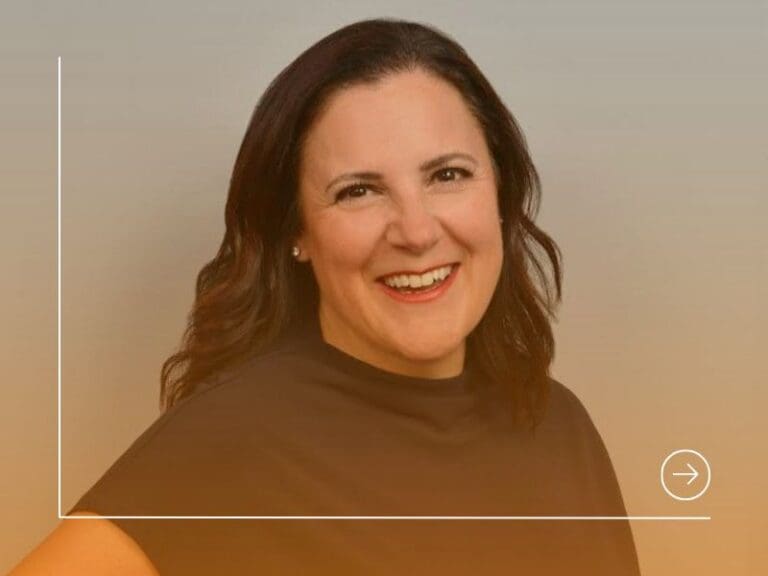


Flavia is a seasoned business leader who has worked across the financial services and paytech industries for over two decades.
Prior to her current role at Soldo, she held senior positions at American Express, Contis and Nexi. Outside of work, Flavia is also a Payments Association judge, a mentor at Oxford’s fintech incubator and active in UK policy circles.
How did you land your current role? Was it planned?
I’d say landing my current role was driven by a combination of my professional background and a long-standing passion for improving how businesses operate. Early in my career, I gained hands-on experience in change management and business transformation, which sparked my lasting interest in this field. While I’ve worked across several industries, I’ve always been drawn to financial services because I enjoy the challenge of balancing regulations, driving customer value and scaling a business at pace.
Joining Soldo wasn’t planned. I first met our founder and CEO, Carlo Gualandri, when we were speaking on the same panel at an industry event. At the time, I was advising on several projects and Carlo asked me to do some work with Soldo. It was a fantastic experience, and as they say, the rest is history.
Did you (or do you) have a role model in tech or business in general?
’ve been fortunate to have had several role models throughout my career. At Electrolux, I worked with an inspiring leader who showed me the power of developing talent and investing in people. Later, at American Express, I had the opportunity to observe the CEO, Ken Chenault, in action. He led a significant transformation of the business with a clear strategic vision underpinned by strong ethical leadership. Watching that balance of performance and principle left a lasting impression on me.
What are you most proud of in your career, so far?
I’d highlight three things. First, the positive impact I’ve had on the development of many young professionals, through both formal and informal mentorship. Seeing people grow in confidence and capability is incredibly rewarding.
Second, contributing to the transformation of several businesses, helping to create tangible value for customers and shareholders alike.
And third, what I jokingly call my ‘PHD in leadership’, earned outside the corporate world. I’ve sailed across the North and South Atlantic and the Indian Ocean, and completed high-altitude mountaineering expeditions, including summiting Aconcagua.
Out at sea and in the mountains, the stakes are high and there’s little room for error. When performance slips, the consequences are immediate. Those environments fundamentally shaped how I view leadership under pressure. They taught me about resilience, calm decision making and the importance of empathetic, structured leadership. The lessons translate directly into the corporate world and have significantly influenced how I lead teams today.
What does an average workday look like for you?
I’m an early riser and value having some time to myself before the working day begins. When I’m not travelling, I use that time to think independently and prepare for the priorities ahead. Outside of work, I make a conscious effort to recharge. Spending time with friends and immersing myself in the arts, whether at concerts or in the theatre, helps me reset and maintain perspective.
Are there any specific skills or traits that you notice companies look for when you’re searching for roles in your field?
It depends on which area of financial services your business operates in, as well as the structure of the organisation itself. Resilience and flexibility are universally valuable traits in business. That said, one clear trend I’ve seen is the growing importance businesses place on recruiting for, and developing, AI skills.
For many finance leaders, the priority will be ensuring their teams are equipped with a modern, fit-for-purpose technology stack, so they can keep pace with innovation and remain competitive. The responsible, strategic use of AI will be central to this, enabling more efficient financial administration, closing gaps in spending data, improving day-to-day productivity and identifying fraudulent activity faster. Just as critical is ensuring teams have the right skills and training to use these tools effectively, both to support responsible use and to maximise return on investment.
Have you ever faced insecurities and anxieties during your career, and how did you overcome them?
Absolutely. There have been moments when I’ve chosen to step away from the status quo. Early on in my career, I left Electrolux to move to the US and complete an MBA. Then, around 15 years later, I left my role at American Express to spend nearly a year sailing across the North Atlantic, Indian and Pacific Oceans. In both cases, I knew what I was leaving behind, but had no certainty about what lay ahead.
Those decisions were daunting, but they led to some of the most enriching experiences in my life. I truly believe if there’s a will there’s a way.
My advice would be to stay focused on learning and development. Be open minded, stay humble, and seek out the best people to learn from, the rest tends to follow.
What advice would you give other women wanting to reach their career goals in technology?
First and foremost, don’t listen to people you tell you that you can’t. Apply yourself, work hard, stay curious and seek out the right advice.
Technology as an industry is still male dominated in many areas, but that shouldn’t be seen as a barrier. Women are already proving it’s possible to thrive at the top of major global technology companies. Leaders like Safra Catz at Oracle, Lisa Su at AMD, and Gina Rometty, former CEO of IBM.
The talent and the opportunity are there. More women need to back themselves to seize them.