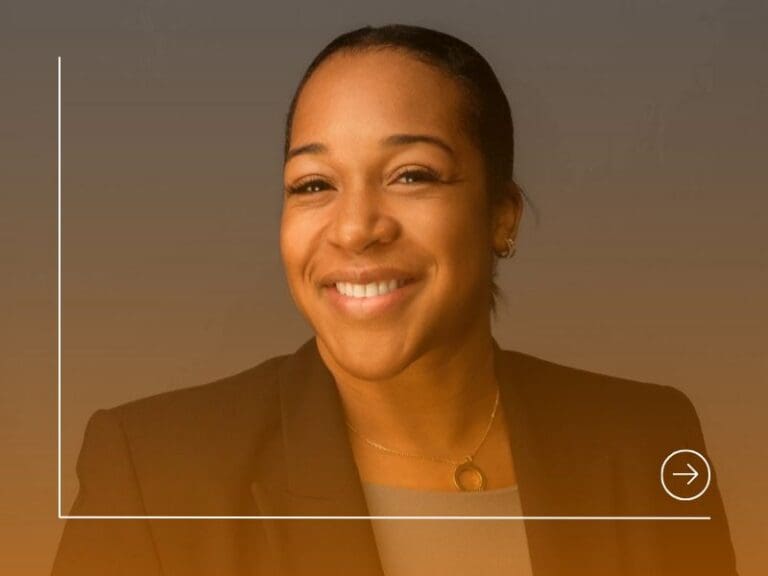


Maira Ata is an Applied Scientist with a background spanning software engineering, data science and AI.
She specialises in translating advanced AI research into practical, production-ready solutions, particularly in regulated and high-stakes environments. Alongside her technical work, she shares insights on AI, data and emerging technologies through QuantLeap and contributes to open-source and open-data initiatives. Maira is passionate about building AI that is useful, trustworthy and accessible, while supporting knowledge-sharing across the wider technology community.
How did you land your current role? Was it planned?
It wasn’t planned around a particular job title, but the direction of travel was quite deliberate.
My background is in software engineering, and over the years my work moved increasingly towards machine learning, NLP and systems that had to make sense of complex, unstructured information. Long before the current generative-AI cycle, I was already working on regulatory question-answering, knowledge graphs, entity resolution, credit-scoring and other applied machine-learning problems.
So my current role feels less like a move into AI and more like the continuation of work I had already been doing, as the underlying technology became significantly more capable.
What has changed is the level of autonomy and complexity we can now engineer into these systems. My work today is not really about using an LLM or building a RAG pipeline in isolation. It is about architecting production AI systems: how models reason across multiple steps, how they interact with tools and enterprise data, how agents are orchestrated, how outputs are evaluated, where human judgement needs to remain in the loop, and how the entire system can be monitored and trusted in a regulated environment.
That is the part of AI I find most interesting. Getting a model to produce an impressive answer is no longer the difficult problem. The harder problem is building systems that remain reliable when they encounter ambiguity, incomplete information, changing regulation and real operational consequences.
My current role grew naturally out of wanting to work on those harder problems.
What are the key roles in your field of work, and why did you choose your current expertise?
There are a few core roles across applied AI today: research scientists developing new methods, applied scientists translating those methods into practical use cases, AI and machine-learning engineers building production systems, AI architects designing how models, data, tools and infrastructure fit together, and specialists focused on evaluation, safety, governance and MLOps.
My own work sits between applied AI engineering and architecture. I gravitated towards that because I’ve always been more interested in the full system than in any one model. The challenging part is not getting an AI model to perform well in isolation; it’s designing a system that can use tools and data safely, make decisions across multiple steps, be evaluated properly, and remain reliable once it is operating in the real world.
That becomes even more important in regulated environments, where you need to think about traceability, human oversight, failure modes and accountability from the beginning. My current work reflects that systems-level focus, spanning agent orchestration, tool-calling, multimodal AI and evaluation frameworks.
That’s really why I chose this area: the models will keep changing, but the harder and more interesting problem is how we engineer AI systems that organisations can actually trust and use responsibly.
Did you (or do you) have a role model in tech or business in general?
I’ve never really had one single role model. I’ve taken inspiration from different people at different stages of my career, particularly people who combine technical depth with the ability to build, lead and create meaningful change.
I’ve always admired people like Fei-Fei Li for combining technical excellence with a broader sense of purpose, and Andrew Ng for the way he has helped make AI education and knowledge more accessible.
I’m also inspired by entrepreneurs such as Demis Hassabis, who combined a very strong research background with the ambition to build DeepMind, and Alexandr Wang, who built Scale AI around a fundamental problem in the AI ecosystem. What I find interesting about founders like that is the willingness to start with a difficult problem, take risks and build before all the answers are obvious.
That resonates with my own experience of co-building Love For Data and later developing AI products in relatively lean environments. I enjoy that builder mindset: working across technology, product and business, making decisions with incomplete information and learning quickly as you go.
So rather than trying to emulate one person, I’ve tried to take specific qualities from people I admire: curiosity, intellectual honesty, resilience, the courage to build, and the ability to keep learning as the technology and environment change.
What are you most proud of in your career, so far?
I’m most proud of the breadth of my journey. I started in software engineering, moved into machine learning and AI, and over time grew into roles where I could work across technology, product, research and business.
One experience I’m particularly proud of was co-building Love For Data. It pushed me beyond thinking purely as an engineer and taught me to think like an entrepreneur: identifying a problem, building around it, working with a team, making difficult decisions and taking ownership without the structure of an established organisation behind me. It taught me a lot about leadership, resilience, product-market fit and what it really takes to turn an idea into something useful.
I’m also proud of the AI systems I’ve built in RegTech and financial services, where the challenge is not simply to experiment with new technology, but to make it reliable enough for real-world, regulated environments. That has meant taking technologies such as LLMs, agentic systems and retrieval-based architectures and turning them into products that people can actually use and trust. Her résumé supports that current production focus across regulated AI products, agentic systems and evaluation.
Ultimately, I think what I’m proudest of is the evolution itself: from engineer, to AI specialist, to builder and entrepreneur, while continuing to learn and reinvent myself. That combination of technical depth, curiosity, ownership and resilience probably defines my career better than any single job title.
What does an average work day look like for you?
My typical workday is a mix of deep technical work, problem-solving, collaboration and continuous learning. I usually start by identifying the one or two problems that will have the biggest impact and try to protect my most focused time for those. That might mean designing an AI system, working through a difficult architecture problem, evaluating model behaviour, debugging something complex, or thinking about how a product should evolve.
A significant part of my day is also spent working with stakeholders and translating business or regulatory requirements into practical technical solutions. Because I’ve often worked in relatively lean teams, I’m comfortable moving between architecture, coding, research and product thinking—and sometimes simply working out what the most important problem is to solve next.
I also make time for research and learning. AI is moving too quickly to treat learning as something separate from the job; it has to be part of the work itself.
For me, a good day isn’t one where I’ve simply completed a list of tasks. It’s one where I’ve solved something difficult, learned something new and moved a meaningful problem forward.
Are there any specific skills or traits that you notice companies look for when you’re searching for roles in your field?
I’ve noticed that companies are increasingly looking for a combination of technical depth, product judgement and ownership. In AI, knowing how to use a particular model or framework is no longer enough. Companies want people who understand the underlying principles, can evaluate whether an approach is actually working, and can take a problem from ambiguity through to a reliable production system.
The other trait I see coming up repeatedly is adaptability. AI is moving so quickly that the tools and techniques you rely on today may look very different six months from now. Curiosity, independent learning and being comfortable operating with uncertainty are becoming just as important as technical expertise.
At a more senior level, communication and leadership matter enormously. You need to be able to explain complex technical ideas to non-technical stakeholders, make sensible trade-offs, challenge assumptions when necessary, and bring people with you rather than simply being the person who writes the code.
I think the strongest people in this field are the ones who can combine all three: technical credibility, sound judgement and the ability to turn complexity into something useful.
Has anyone ever tried to stop you from learning and developing in your professional life, or have you found the tech sector supportive?
I’ve experienced both sides. The tech sector can be incredibly supportive of learning, but there are also environments where experimentation and development have to compete with immediate delivery pressures. At different points in my career, I’ve had to create my own opportunities to grow rather than wait for an organisation to provide them.
That has shaped the way I approach my career. When I became interested in machine learning, I took the initiative to deepen my knowledge and apply it to real problems. The same has been true as AI has evolved—I’ve generally tried to understand where the technology is heading and start building with it early, rather than waiting for someone to formally make it part of my role.
So I wouldn’t say anyone has fundamentally stopped me from developing. There have been constraints—time, resources, competing priorities. But I’ve learned not to treat those as reasons to stand still.
One of the biggest lessons from my career is that you have to take ownership of your own development. If something genuinely interests me or I believe it will matter in the future, I don’t wait for permission or for the perfect environment to start learning it.
Have you ever faced insecurities and anxieties during your career, and how did you overcome them?
I think insecurity is a normal part of any career, but technology can amplify it because the field changes so quickly. I’ve definitely had periods where I questioned whether I was good enough, particularly when stepping into unfamiliar areas or taking on responsibilities that were bigger than anything I had done before.
What helped me was learning not to confuse not knowing something with not being capable of learning it. When I come across something unfamiliar, I try to break it down, understand what I need to learn, apply it in practice and get feedback. Over time, that process builds confidence because you realise that you don’t need to have every answer at the beginning.
I’ve also become much more comfortable with uncertainty. Earlier in my career, I felt I needed to be completely prepared before putting myself forward or making a decision. Now I’m much more comfortable saying, “I don’t know yet, but I know how to figure it out.”
That shift has probably been one of the most important parts of my professional growth. Confidence, for me, hasn’t come from knowing everything; it has come from trusting my ability to learn, adapt and work through difficult problems.
Entering the world of work can be daunting. Do you have any words of advice for anyone feeling overwhelmed?
My biggest advice would be not to feel that you need to have your whole career figured out from the beginning. I certainly didn’t. I didn’t start out with a roadmap that would eventually take me from software engineering into AI, research and entrepreneurship. I focused on learning, doing good work and taking opportunities that stretched me.
It’s also very easy to compare yourself with other people, especially in technology, where you constantly see people sharing achievements and career milestones. Try not to use someone else’s timeline as the measure of your own progress. Everyone starts from a different place and moves at a different pace.
And finally, get comfortable with not knowing everything. Ask questions, find people you can learn from, build things, make mistakes and keep going. Your first role doesn’t need to define the rest of your career.
What matters much more is developing the confidence to keep learning, adapting and moving towards the kind of work that genuinely interests you.
What advice would you give other women wanting to reach their career goals in technology?
My advice would be don’t wait until you feel completely ready before taking the next step. Some of the biggest moments of growth in my career have come from taking on something slightly beyond what I already knew and trusting myself to learn the rest along the way.
I’d also encourage women to be deliberate about recognising and communicating their achievements. We can sometimes become so focused on doing good work that we assume the work will speak for itself. It’s important to be able to articulate what you built, the problems you solved, the decisions you influenced and the impact you created.
I also think it’s important not to let being in the minority—or simply feeling like an outsider—make you question whether you belong. Technology changes constantly, and nobody has all the answers. Your ability to learn, adapt, think critically and bring a different perspective is part of your value.
Finally, find people who genuinely support your growth, build a strong network, and retain a sense of ownership over your career. There will be setbacks and moments of self-doubt, but they don’t have to determine your direction. Keep building your skills, keep putting yourself forward, and don’t make yourself smaller to fit someone else’s idea of what a technologist or leader should look like.