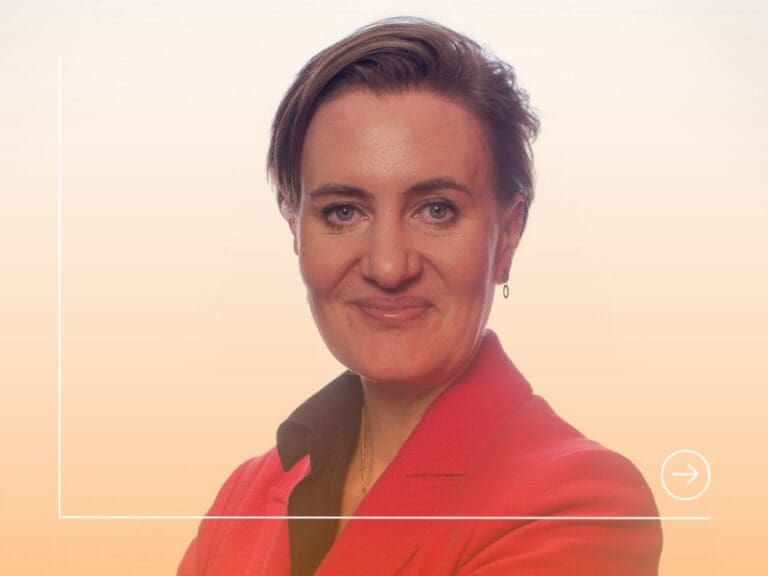

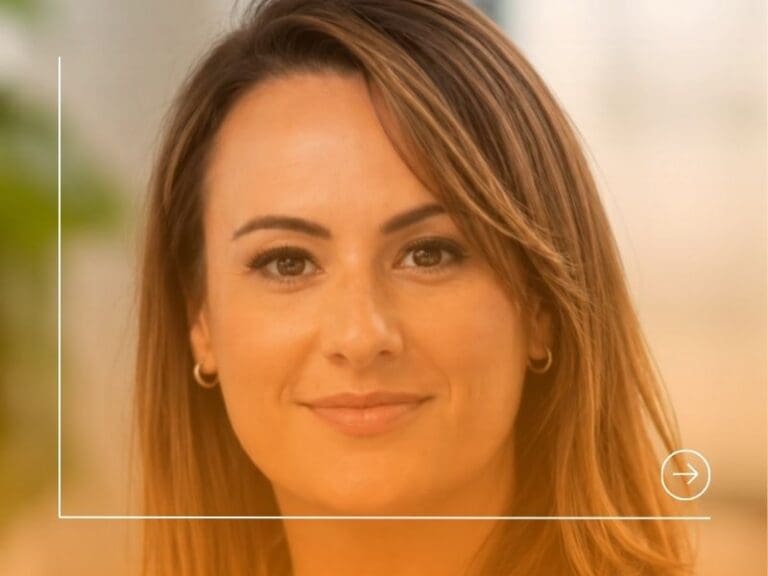
Rebecca McCartney is Managing Director of workplace technology specialists ClearVC and VideoCentric.
She began her career in sales administration before moving from Cornwall to Manchester and entering the AV and videoconferencing industry in 2012, an industry she admits she didn’t even know existed at the time. She joined ClearVC in 2016 in Service Delivery and has progressed through Operations Manager and Chief Operating Officer to Managing Director. Today, she leads the businesses through their next stages of growth, with a particular focus on customer experience, people development, innovation and the future of workplace technology.
How did you land your current role? Was it planned?
Not at all. If you’d asked me at 18 whether I would become Managing Director of a technology company, I wouldn’t have believed you.
I chose not to go to university after sixth form and started my career in sales administration. After moving from Cornwall to Manchester, I entered the AV and videoconferencing industry in 2012 almost by accident. At the time, videoconferencing was very different from what we know today. It wasn’t widely accessible and enterprise systems could cost tens of thousands of pounds and require significant infrastructure.
I joined ClearVC in 2016 in Service Delivery and progressed through Operations Manager, COO, and ultimately Managing Director.
A significant part of that journey was having people who believed in me. Adrian, ClearVC’s founder, gave me an incredible amount of trust and opportunity. He challenged me, allowed me to take responsibility and gave me room to grow. That has had a big influence on how I now lead others.
My career definitely wasn’t planned. I’ve built it by being curious, working hard, learning from exceptional people and saying yes to opportunities that sometimes scared me.
What are the key roles in your field of work, and why did you choose your current expertise?
One of the things I love about workplace technology is how broad the industry actually is. There are careers in engineering, system design, software, project management, service, operations, customer success, sales, marketing and leadership.
My own expertise developed around operations, service delivery and customer experience rather than following a traditional technical route.
That has shaped how I see technology. I’m interested in what it enables rather than simply what’s inside the box. You can design the most technically impressive system in the world, but if the customer finds it difficult to use or doesn’t receive the right support afterwards, you haven’t delivered a great outcome.
Did you (or do you) have a role model in tech or business in general?
One of my earliest role models wasn’t actually in technology.
My first career was within the holiday park industry, where I worked alongside a brilliant female General Manager. At the time, she was one of only two female General Managers within the business.
She taught me to never settle and always aim higher. Seeing a woman leading confidently in another traditionally male-dominated environment had a lasting impact on me.
Later, Adrian’s belief in me at ClearVC had a different but equally important influence. He demonstrated the impact a leader can have simply by seeing potential in someone and trusting them with an opportunity.
Those experiences have shaped something I strongly believe today: sometimes somebody else sees your potential before you do. Great leaders give people the opportunity to discover it.
What are you most proud of in your career, so far?
I’m incredibly proud of helping ClearVC evolve from a small business operating largely behind the scenes for bigger integrators into a recognised workplace technology company in its own right.
When I joined in 2016, we were a team of around six people. Throughout that growth, we’ve worked incredibly hard not to lose the thing that made the business special in the first place: outstanding customer experience and genuine relationships.
Seeing ClearVC shortlisted in 2026 for both AV Integrator of the Year and Corporate Project of the Year for our work on Auto Trader’s new Manchester headquarters was therefore incredibly special.
For me, those nominations represent much more than potentially winning a trophy. They represent the early starts, late nights, difficult decisions, incredible projects and relationships our team has built over many years.
I’m proud that we’ve grown, but I’m even prouder that we’ve grown without forgetting where we came from.
What does an average work day look like for you?
I’m not sure an average one exists!
As Managing Director, I can move from reviewing financial performance and strategy in one meeting to discussing a major customer opportunity, recruitment, an acquisition or AI implementation in the next.
We run the business using EOS, and that’s created much more structure around how our teams operate. Our weekly meeting rhythm gives departments dedicated time to review performance, identify issues and opportunities and solve them together. The meeting isn’t dependent on the most senior person leading it either; the host can rotate, which encourages people throughout the team to contribute and take ownership.
A significant part of my role is now making sure we have the right people, structure and direction rather than personally solving every problem.
That’s been an important evolution for me as a leader: my job isn’t to have all the answers; it’s to build a business capable of finding them.
Are there any specific skills or traits that you notice companies look for when you’re searching for roles in your field?
Technical capability is obviously important in technology, but I think attitude, curiosity, accountability and emotional intelligence are just as valuable.
Technology can be taught. Someone’s approach to customers, colleagues and responsibility is much harder to change.
I also think our industry needs to become more open-minded about where talent comes from. I didn’t have a degree or a technical background when I entered AV. Someone gave me an opportunity and I learnt.
I’d rather find someone with curiosity, the right mindset and a genuine desire to learn than dismiss great potential because their CV doesn’t follow the conventional route.
Has anyone ever tried to stop you from learning and developing in your professional life, or have you found the tech sector supportive?
Overall, I’ve found the technology sector incredibly supportive of my learning and development. I entered the AV industry in 2012 knowing very little about the technology, so much of what I know today has come from being curious, asking questions and learning from some exceptionally knowledgeable colleagues, engineers, manufacturers and customers along the way.
I’ve never been afraid to say, “I don’t know, but I want to understand.” I think that mindset has been fundamental to my progression. Technology changes so quickly that none of us can ever consider ourselves finished learning.
There have certainly been times, particularly as a woman without a traditional technical or university background, when I’ve felt I needed to establish my credibility before my voice was heard. Rather than allowing that to become a barrier, it made me more determined to understand the industry, keep developing and earn the confidence to contribute.
I’ve also been fortunate to have people throughout my career who have actively encouraged my development. At ClearVC in particular, I was trusted with opportunities and responsibilities that allowed me to grow into roles I might not initially have thought I was ready for.
That experience has influenced how I lead today. One of our values is ‘Learning Is Caring’ because I don’t believe knowledge should be protected to make one person indispensable. Share it, mentor others and help the people around you become better. Ultimately, the more knowledge we share, the stronger the whole team becomes.
Have you ever faced insecurities and anxieties during your career, and how did you overcome them?
Absolutely. I think most people who continually push themselves outside their comfort zone experience moments where they question whether they’re ready.
I didn’t go to university, I didn’t enter technology through a conventional route, and I’ve progressed into increasingly senior positions. There have definitely been moments when I’ve wondered whether I knew enough or was ready for the next step.
What I’ve learnt is that you don’t need to know everything before you’re ready to progress.
Surround yourself with people who know things you don’t. Ask questions. Listen. Keep learning. And don’t mistake being uncomfortable for being incapable.
I’ve also learnt that leadership isn’t about being the smartest person in the room. In fact, if I’m consistently the smartest person in every room, I’ve probably built the wrong team.
Entering the world of work can be daunting. Do you have any words of advice for anyone feeling overwhelmed?
Don’t put pressure on yourself to have your entire career mapped out at 18 or 21.
I certainly didn’t.
Your first job doesn’t need to define your final destination. What matters is what you learn from it: how to work with people, how to communicate, how to take responsibility and how to be part of a team.
One of the biggest lessons I learnt in my first job was that no one succeeds alone. Sometimes you need to step outside your role, roll your sleeves up and help the person next to you. When the team succeeds, we all rise together.
Be curious, ask questions and take opportunities even when you don’t feel completely ready. Careers are often built through a series of opportunities rather than one perfectly executed plan.
What advice would you give other women wanting to reach their career goals in technology?
Don’t wait until you feel 100% ready.
Women can sometimes feel they need to know everything before putting themselves forward, particularly when they’re entering rooms where they don’t see many people who look like them.
I’ve spent significant parts of my career in male-dominated industries, and there have certainly been occasions where I’ve felt I’ve needed to establish my credibility before being heard.
But I’ve also learnt not to allow that to define what I’m capable of.
Find people who challenge you, learn from people who are better than you at things you want to understand, and don’t be afraid to ask for opportunities.
And when you eventually find yourself in a position where you can open a door for somebody else, hold it open.
I was given opportunities because people saw potential in me and trusted me to step up. Now that I’m in a leadership position, I believe part of my responsibility is creating those opportunities for the next generation.
Success becomes much more meaningful when you can help somebody else rise with you.