
Gillian Whelan is MD and Country Manager at international IT & business consultancy emagine’s operation in Ireland, where the firm has more than 300 employees based in Dublin and Cork.
 In Ireland the firm specialises within finance, insurance, utilities, pharma and the public sector.
Globally, emagine operates across 15 countries, supporting clients with business challenges by providing digital, tech, and business consulting services, training, and managed solutions delivered through bestshoring, the firm’s practice of bringing together bespoke global teams for each project.
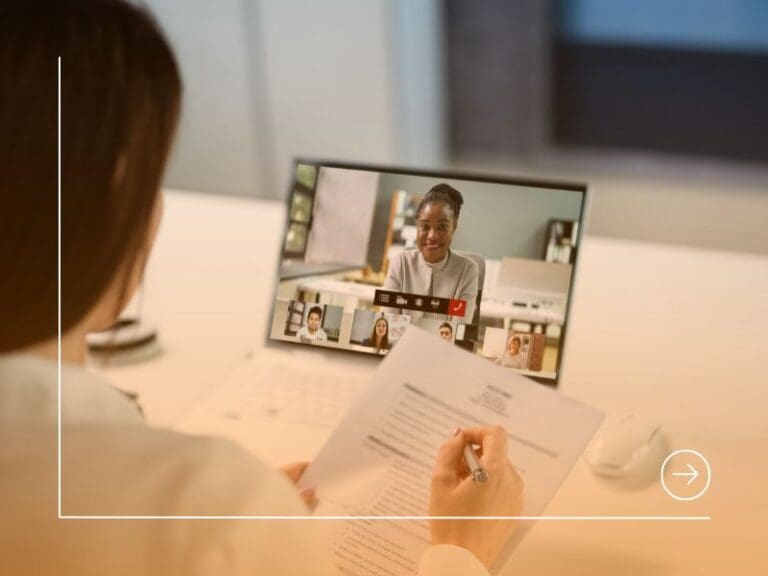
Virtual interviews have become a core part of the hiring process across the global tech industry.
Yet for many women – whether entering the sector for the first time, returning to the workplace after a career break, or progressing into more senior roles – the format often divides opinion.
Whereas some appreciate the flexibility, cost benefits, and limited disruption of virtual interviews, others dread what feels like an impersonal, cold, and even daunting experience if they feel uncomfortable on camera.
But with close to 20 years’ experience in the tech sector and leading an organisation of over 300 employees and consultants, I have watched applicants’ prospects fly and die depending on how they approached the interview.
Where candidates go wrong is in the way they fail in making a connection with their interviewer. Those who succeeded treated the webcam like a boardroom and sought to make a genuine connection with the hiring manager on the other side of the digital screen.
Whether a candidate perceives it as an ‘obstacle’ or a gateway to their next career win often defines their chances of virtual interview success. Here are my tips on how to use virtual interviews to get the job outcomes you want.
Get comfortable
The biggest issue people have with virtual interviews is that they lack ‘warmth’, they are seen as impersonal. That may have been the case when the virtual format was in its infancy but the migration to remote working in recent years has turned this on its head. Today, candidates favour the fact that virtual interviews can be held in an environment they can control (such as their home), but this needs to be staged in the right way.
Your environment is part of your presentation, so choose a quiet, well‑lit space where you feel comfortable, just avoid making yourself too comfortable. Use a chair that is suitable for a home or physical office, one that enables you to sit up straight because if you slouch, you look uncomfortable on camera and that can project a lack of confidence.
Light up
Good lighting makes you easier to see (and read!), but you do not need a professional studio to get the get this right. Simple acts such as ensuring that any lights are behind the camera rather than behind you and avoiding sitting with a bright window behind you can make a huge difference in terms of making your face easier to see and reducing any shadow effects. This in turn helps to convey confidence and clarity and keeps the hiring manager’s focus on you, not what is behind you.
Look into their eyes
We are taught to look people in the eye when talking with them, but when it comes to virtual interviews you need to keep your focus on the camera lens instead. It is hard, but it is also important if you want the interviewer to feel like you are speaking directly to them.
Most virtual applications allow you to relocate the window anywhere on your screen, so move it directly under your camera lens. This makes it easier to maintain the illusion of eye contact even if you look at their face.
And remember to smile and nod while listening as you would during an in-person interview, this simple act reassures the interviewer that you are fully present; thereby, actively overcoming the ‘impersonal’ trap that trips up less-prepared candidates.
Keep your head up
One of the most common mistakes people make when taking part in a virtual interview is they get the set-up of their computer all wrong. This is all about attention to detail, if you cannot get the basics such as how to position your computer correctly that does not reflect very well on your potential to problem solve either.
Position your camera at eye level by placing your laptop on a stand or stack of books. This really matters because it creates a natural sense of connection and is more engaging than looking down through the camera, nobody wants to be looked down upon, especially a hiring manager!
Do not play to the camera
Constantly watching your own face on screen during an interview can be slightly disconcerting and it may make many people extremely self-conscious about their facial expressions, body language, and even the words they speak. This sees many women over-think their responses in a bid to be more polished and confident, which only serves to add to existing stress levels. The goal is not to change who you are, but to ensure the format works for you rather than against you.
Treat it as seriously as an in-person interview
Just because the interview is being held online and within an environment that is comfortable for you, that does not mean it is more relaxed and informal or less professional. The hiring manager’s expectations of you in terms of preparation, presentation, and conduct remain identical.
Do your homework on the company by researching its people, clients, markets, and even the hiring manager(s) themselves. Be sure you fully understand the expectations of the role and how it aligns with both your strengths and interests.
Remember, both parties have a stake in the game, and your responsibility is to anticipate and prepare for any questions they might ask to determine if you are the one they want, whilst conversely readying your questions so that you can do likewise. Prepare examples, if you have any, that demonstrate the difference and impact you have made in your current/most recent role.
Be sure to log into the meeting earlier than the stated interview time, seeing you in the virtual waiting room several minutes before the interview is due to start speaks volumes of your preparedness and enthusiasm for the role. It is all about making favourable first impressions.
Finally, prepare your pitch
Always remember that an interview, virtual or otherwise, is a two-way process. The hiring manager is seeking someone to fulfil a need they have and to sell their organisation to you as an employer of choice, one that is best placed to help you achieve your career goals.
At the same time, the interview is your opportunity to see if the business can provide the right environment to enable you to thrive, and for you to sell yourself as the ideal candidate of choice if it is.
Whilst virtual interviews might not be your medium of choice, it is important to make sure you do not let a screen stand between you and the career you deserve. With the right preparation, they can be just as personal, impactful, and professionally empowering as any in‑person meeting.