
Dominic Colenso is an international speaker, communication coach and the author of Cut-Through: The pitch and presentation playbook.
 Whether you’re walking a team through a project update or pitching an idea to senior stakeholders, presenting online is harder than most people admit.
The screen dulls your energy, weakens the feedback loop and makes it tougher for your ideas to land with the clarity they deserve. Even strong presenters can find themselves fighting a format that seems designed to distract.
The good news is that virtual doesn’t have to mean boring. With a few small tweaks, you can keep people engaged, connected and actually listening. Here are five proven ways to make your online presentations cut through the noise.
Turn up your energy
On my first ever TV job, a BBC period drama called The Lost Prince, I was lucky enough to work alongside Bill Nighy. Before one of the early scenes, I asked him for some advice. What he told me was a game changer: “The camera sucks energy out of your performance.” He was right. What feels big in real life often looks muted on screen.
The same thing applies to virtual meetings. The camera reduces your natural presence by about 20 percent. So if you show up at your normal energy level, you risk coming across as flat or simply not that invested.
Dial yourself up. Sit or stand tall. Use your hands. Let your voice have a bit more volume. You don’t need to roll out the jazz-hands, but you do need to amplify your presence. If it feels a touch bigger than usual, it’s probably about right.
When your energy lifts, the virtual room lifts with you.
Find the spotlight
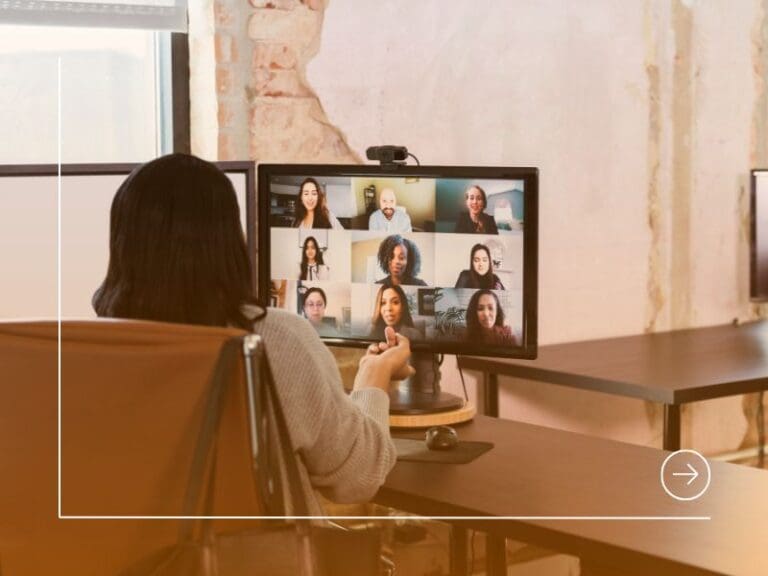
Most virtual meetings leave everyone staring at a sea of thumbnails. No one knows where to look. Your audience’s attention is split between two screens, seventeen browser tabs, three pop-up notifications and whatever’s happening on Slack.
Using the spotlight feature instantly fixes that. All the major virtual meeting platforms have a similar setting. It brings you into focus. Your facial expressions, gestures and reactions become visible again. You stop competing with twenty tiny boxes, and your audience has just one clear place to look.
This isn’t about ego. It’s about clarity. When people can see you, they stay connected. They absorb more. They trust you more. If you’re leading the meeting or delivering a presentation, take control of the environment and spotlight yourself. You’ll make it easier for people to follow.
Ask for cameras on
This one is controversial, but it’s important.
If you want engagement, you have to ask for it. And that starts with cameras on.
Most people aren’t actively refusing; they’re just waiting for someone else to set the tone. If you don’t ask, you don’t get. So take the lead. At the start of the session, say something warm and straightforward like: “If you’re able to, I’d love everyone to be on camera today. It helps us connect, and it means I can check I’m explaining things clearly.”
Sell the benefits. Cameras on make the session more human. You get instant feedback on whether things are landing. And the meeting becomes a dialogue rather than a monologue.
Not everyone will switch on, but most will. And even a handful of visible faces can change the energy ion screen.
Don’t get stuck on the slides
This is one of the biggest killers of online engagement. You start sharing the screen at the beginning of the meeting and don’t stop until it ends. The audience never sees your face again.
Slides should support your message, not replace you.
Think about using them in short bursts. Share the slide when you need it, then turn it off. Bring the focus back to you. Then share again when it adds value. It’s a simple pattern interrupt that wakes people up and pulls their attention back to the present moment.
Switching between your face and your content also helps you reinforce key messages. The human brain is naturally drawn to change. So create moments of contrast. Your audience stays with you because they’re unsure what’s coming next.
Cut it into bite-sized chunks
Online attention spans are brutally short. You’ve got five minutes, probably less, before people start drifting. Emails, phones and browser tabs are all competing for their focus.
Instead of fighting that reality, design for it.
Break your presentation into small, manageable pieces. A few slides, then a question. A short explanation, then a quick discussion. Use breakout rooms to let people explore ideas. Ask for reactions in the chat. Invite a show of hands. Anything that shifts the rhythm.
Variation drives engagement. The more you switch things up, the more people stay with you. And as a side benefit, you become a far more dynamic presenter.
Virtual presentations aren’t going anywhere. They’re becoming a bigger part of how we share ideas, pitch solutions and build influence. But they don’t have to be flat or forgettable.
With a little more energy, a bit more structure and the confidence to take control of the environment, you can deliver online meetings and presentations that feel alive, connected and genuinely compelling.
If you want the full playbook for creating communication that truly grabs your audience and leaves them wanting more, my new book Cut-Through goes deeper into the simple tools that make presentations land with impact.