
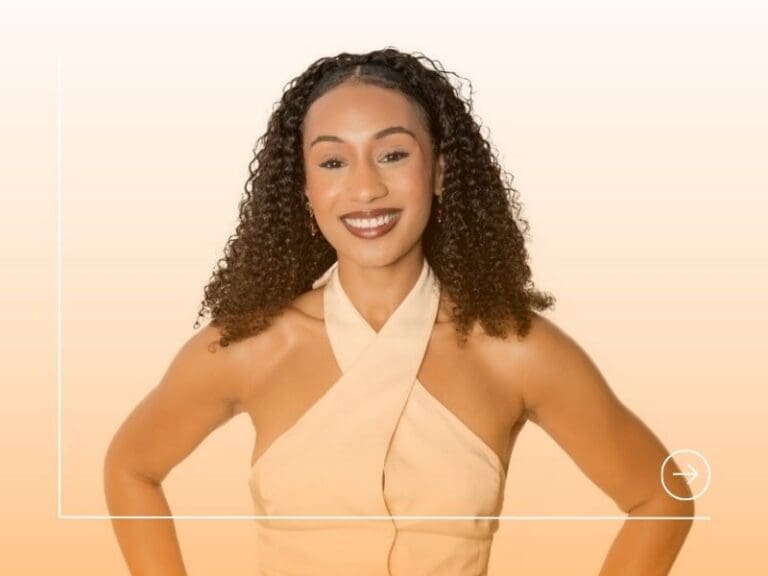
Maciah Smith is a Strategy and Innovation Technology Roadmapping Analyst at Johnson Matthey, where she combines her scientific background with strategic foresight to shape long-term innovation and growth strategy.
Working across commercial, technical and leadership teams, she translates emerging technologies, market trends and customer insights into new growth opportunities and emerging technologies that could shape Johnson Matthey’s future growth and generate millions of pounds in long-term commercial value.
Her strategic roadmapping has also enabled the securement of externally funded PhD research projects and helped inform investment decisions across Johnson Matthey’s innovation portfolio. Earlier in her career, Maciah worked as a scientist, developing analytical methodologies that became internal standards and contributing to intellectual property supporting hydrogen technologies.
Alongside her professional role, Maciah chairs Johnson Matthey’s Black Employee Network and is passionate about representation, inclusive leadership and widening access to STEM. She volunteers her time mentoring emerging talent and sharing her career journey with students and early-career professionals. In recognition of her work, she’s recently been announced a finalist in the 2026 Black British Business Awards in the Rising Star – STEM category.
How did you land your current role? Was it planned?
Not at all, and I think that has been one of the most valuable lessons my career has taught me. I started my career as a scientist and assumed progression would be quite linear: become increasingly technically specialised, deepen my expertise and continue down that path. But over time, I realised that what energised me most was stepping back and asking the bigger questions I didn’t just want to understand how a material behaved electrochemically. I wanted to understand why that mattered. Where was the market going? Which technologies should we be investing in, and when? What might our customers need five or ten years from now?
I’ve always loved solving problems, and I realised I was most energised when I could connect the science to those wider commercial and strategic questions. I also began to understand my own strengths differently. I’m very detail-orientated and technically minded, but I’m equally energised by people. I love building relationships, asking questions, understanding somebody else’s challenge and helping people with very different perspectives find a common language. That combination turned out to be incredibly valuable in strategic technology roadmapping. My role sits at the intersection of science, innovation, markets and strategy. A big part of what I do is bring technical, commercial and leadership teams together, probe beneath what is being said, connect different perspectives and help translate those conversations into choices about where the organisation should go next.
So my career has definitely been quite squiggly. One thing I’ve learned is not to mistake an unfamiliar opportunity for one I’m unqualified for. For me, finding the right career hasn’t been about following a predetermined path. It’s been about understanding what I’m good at, what gives me energy, and having the courage to build a career that plays to that combination.
Did you (or do you) have a role model in tech or business in general?
Three women at Johnson Matthey particularly inspire me. Liz Rowsell, our CTO, has shown me that you can be technically exceptional while still being incredibly people-focused. I’ve always admired how much time she makes for people and how genuinely connected she is across the organisation.
Haddy Davies and Simone Coultress have shown me something different: resilience. They’ve both navigated challenges in their own careers, kept going when the answer wasn’t immediately “yes”, and continued creating opportunities for others along the way.
When my own career isn’t progressing as quickly as I imagined it would, I think about women like them. They remind me that careers take time, resilience matters, and success means even more when you use it to open doors for somebody else
What are you most proud of in your career, so far?
I’m proud of the commercial impact of my work, my roadmapping has helped identify future technologies and new growth opportunities and longer-term emerging technologies, with the potential to create significant long-term value, while enabling new externally funded research projects. Being announced a finalist for this years’ Black British Business Awards has also made me very proud. It’s an honour to be recognised alongside such an inspiring group of people.
However, some of the moments I’m most proud of are much smaller. I love speaking with students and people at the beginning of their careers and watching their confidence grow during a conversation. Sometimes someone starts by saying, “I’m don’t know if I could do that,” and leaves thinking, “Actually, why couldn’t I- sure I can.” Yes my achievements matter, but increasingly I measure impact by what I can enable whether that’s a new technology opportunity for the business or helping another person recognise an opportunity for themselves.
What does an average work day look like for you?
There really isn’t an average day, which is one of the things I enjoy most about my role. A typical day might involve a mix of workshops with technical and commercial teams, conversations with senior stakeholders about long-term technology direction, and time spent synthesising information into clear narratives or roadmaps that help guide decision-making. A lot of my work is about listening carefully, asking the right questions, and helping different perspectives come together into a shared view of where we should go next.
Alongside the more structured parts of the role, there’s also a significant amount of informal interaction. I often find myself having spontaneous conversations with colleagues about their career paths, encouraging them to put themselves forward for the next opportunity or helping them see strengths in themselves that they might not have fully recognised yet. I really enjoy that coaching element and creating space for people to think differently about their potential.
And then, like anyone, there are the lighter moments too, whether that’s chatting about reformer Pilates classes, debating outfit choices for the day, or sharing recommendations for things outside of work. I think it’s important to bring your full self to work. For me, that includes being analytical and strategic, but also creative, expressive and people-focused. Outside of work I enjoy fashion, beauty and creative outlets, and I think that sense of individuality actually helps me connect with people more easily in a professional setting as well.
Are there any specific skills or traits that you notice companies look for when you’re searching for roles in your field?
One of the biggest skills I see growing in importance is data literacy. As organisations become more digital and the volume of information available increases, the value isn’t simply in having more data, it’s being able to turn it into meaningful insight.
Skills in data analytics, visualisation tools such as Power BI, and using systems or statistical approaches to identify patterns and distil complex datasets are increasingly valuable. I see this in roadmapping too: digitalising information allows us to spot trends, connections and opportunities that might otherwise be missed. But technical capability alone isn’t enough. The real value comes from being able to interpret the insight, think critically about what it means and communicate it clearly enough to support better decisions.
Have you ever faced insecurities and anxieties during your career, and how did you overcome them?
Absolutely. Like most people, I’ve experienced moments of uncertainty throughout my career, particularly when stepping into new roles or taking on challenges that stretched me beyond what was familiar. Moving from the lab into more strategic roles, for example, meant learning to be comfortable with not always being the technical expert in the room and recognising that I could bring value in different ways.
I’ve come to see confidence as something you build rather than something you either have or you don’t. Mentors and sponsors have played an important role in encouraging me to recognise my strengths, but some of my biggest confidence boosts have come from simply saying yes to opportunities, even when I didn’t feel completely ready, and discovering what I was capable of.
That has really changed how I approach new challenges. Rather than asking myself, “Can I do this?”, I now ask, “What do I need to learn to do this well?” It turns uncertainty into curiosity and reminds me that growth often comes from being willing to stretch yourself.
Entering the world of work can be daunting. Do you have any words of advice for anyone feeling overwhelmed?
- You don’t need to have your entire career mapped out at 21 or even 30 (me). I still don’t know every step of how I’ll get where I want to go.
- Stay curious. Don’t dismiss a role just because the title doesn’t sound like an obvious fit for your degree or experience. Find out what it actually involves. I genuinely thought I had to remain a scientist because that was what I had trained for, but giving myself permission to explore showed me strengths and career paths I hadn’t considered.
- Build relationships too. Look for mentors whose qualities you admire, and over time, sponsors who will not only advise you but advocate for you when you’re not in the room.
- Most importantly, don’t confuse unfamiliarity with not belonging. Just because your family, friends or immediate network haven’t walked into a particular space before doesn’t mean it isn’t for you.
- You won’t tick every box for every opportunity. Apply anyway. Some of my biggest growth has come from being bold enough to step into spaces I wasn’t sure were meant for me. Instead of asking, “Why me?” ask, “Why not me?”
What advice would you give other women wanting to reach their career goals in technology?
Be good at what you do. I’m a big believer that effort can triumph over talent, but I’ve also learned that hard work alone won’t necessarily make your ambitions or achievements visible. You have to talk about what you’ve contributed and, just as importantly, where you want to go.
I also don’t believe there’s such a thing as being self-made. I know I need a village around me, and sometimes you have to intentionally build that village yourself. Network beyond your immediate team, ask people about their careers and learn from the paths they’ve taken. Find mentors who can guide you, but also sponsors who will advocate for you and create opportunities when you’re not in the room.
And as you progress, share what you learn. I’ve benefited enormously from people generously sharing their time, networks and experience with me, and I feel a responsibility to do the same.