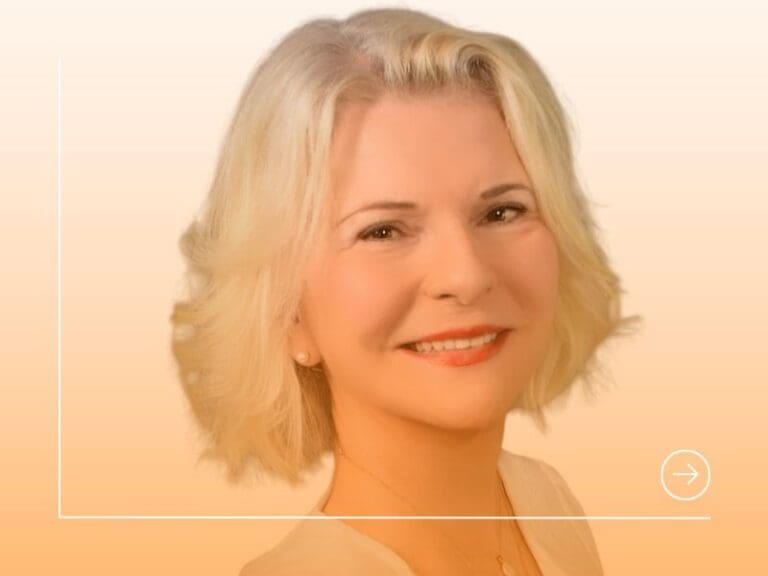

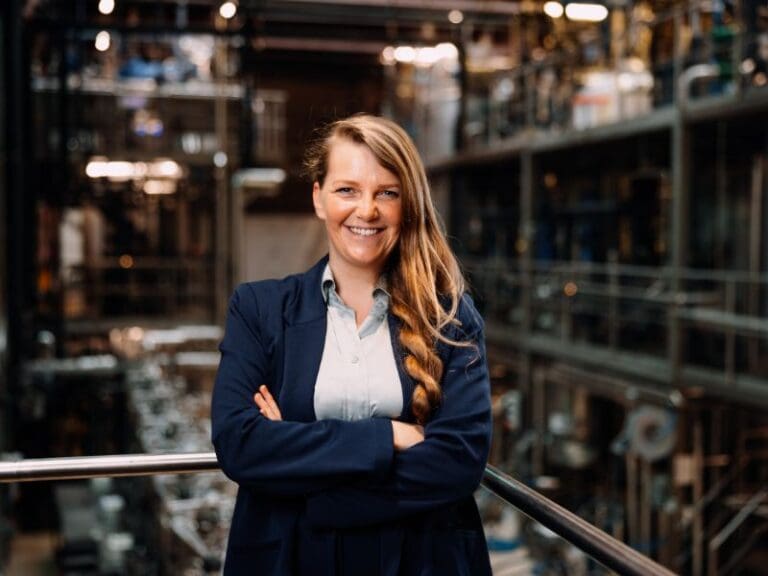
Dr. Sophie Roelants is the co-founder and COO of AmphiStar, where she drives innovation at the intersection of biotechnology, sustainability and commercialisation.
She holds a PhD in Applied Biological Sciences and previously led a major R&D collaboration between the University of Ghent and the Bio Base Europe Pilot Plant, managing international projects that resulted in over 60 publications, five book chapters, and eight patent applications and eventually led to AmphiStar.
After a spell as AmphiStar’s first CEO, Sophie now focuses on aligning scientific development with commercial strategy and execution to help scale AmphiStar’s waste-based biosurfactants to global markets.
How did you land your current role? Was it planned?
After more than a decade working on biosurfactant technology, co-founding AmphiStar off the back of that research in 2021 felt like a natural next step. I initially served as CEO, leading the early development and growth of the company alongside four brilliant co-founders.
As AmphiStar scaled and we successfully raised our first external capital, we decided to bring in an experienced business expert and leader as new CEO to enable and support our next phase of growth. I then shifted into the role of COO, where I can focus fully on translating scientific innovation into commercial success while driving the growth of the company and team—areas that closely align with my background and passion.
What are the key roles in your field of work, and why did you choose your current role?
With a background as a bioscience engineer, a PhD in the field of microbial biosurfactants and more than 15 years’ experience in microbial biosurfactants, creating a business in this field felt like a natural next step once we had a proven concept. The combination of deep scientific work and a broader strategic and operational role allows me to stay close to innovation while shaping the company’s growth, making the work both fulfilling and impactful.
Today, I lead AmphiStar’s Product and Market(ing) development. This involves business development, sales and communication, but also drawing out the R&D and IP strategies at an overarching level. In my role the topic of fundraising (public & private) and corporate management are also still an important part of the job, while ensuring the team has the support needed to thrive.
Did you (or do you) have a role model in tech or business in general?
I wouldn’t say I have a particular single role model, but I find constant inspiration in people who have built something disruptive. Maybe they’ve come up with something revolutionary or they’ve scaled their startups in competition with big established companies.
I’m also particularly inspired by female entrepreneurs and even more so, when they are also mothers to small humans! It is extremely challenging to be both a dedicated parent, staying closely involved in one’s children’s lives, while thriving in the crazy and hectic atmosphere of a startup. As a mother myself navigating the fast-paced world of a startup, I draw encouragement and motivation from seeing other women juggling (and struggling) these two demanding worlds.
What are you most proud of in your career, so far?
I am most proud of how far we’ve come in AmphiStar, building it from a PhD project spinoff into a real company with tangible impact. For me, as someone who’s been involved with our technology since 2009, it’s incredibly rewarding to see our scientific developments grow into a business with secured funding, a strong and fun team and a clear path to scale.
I’m especially proud of our founding team of five – a large number of people for a startup. While we’ve had different ideas, we’ve always maintained an atmosphere of mutual respect and trust and not to forget… having fun, which is quite unusual.
What does an average work day look like for you?
The broad scope of my role and the general craziness of startup life tends to make every day rather different. What is consistent is the large number of (strategic) meetings, operational planning, and external engagement — from client discussions to attending industry events and trade shows to spread awareness of our biosurfactant innovations.
I also focus on supporting the organisational development and maintaining our company values while we grow. As our team grows, I am able to delegate more day-to-day (administrative) tasks to concentrate increasingly on higher-level strategic topics that shape AmphiStar’s future.
Are there any specific skills or traits that you notice companies look for when you’re searching for roles in your field?
In the biotech industry, having excellent knowledge of the field is very important, but so is enthusiasm. Someone with a genuine interest in advancing our understanding of the bioeconomy in general and biosurfactants in particular is more likely to be happy in their role and give it their all, and to seek to further their own knowledge. Sustainability is a key driver of biosurfactant innovation right now and companies value team members with a solid understanding of how biochemicals can help address sustainability issues across multiple industries. Curiosity, creativity, critical though positive thinking are a few traits I get excited about.
Has anyone ever tried to stop you from learning and developing in your professional life, or have you found the tech sector supportive?
Overall I’ve found the tech sector to be highly supportive and collaborative. I’ve had very limited negative experiences and those I had were with individuals quite early in my (academic) career, but they were rare and I’ve been fortunate to work with people who share a collaborative mindset, including my former professor and now co-founder.
In my experience, this sector tends to attract people who want to build meaningful change, not just chase profits. I’ve always found that there’s a genuine spirit of helping one another, even among competitors for the same funding or market share, because people feel the market is big enough for everyone and everyone wins when we advance the field.
Have you ever faced insecurities and anxieties during your career, and how did you overcome them?
Definitely. During my PhD, I struggled to get the results I needed to write my thesis. I had sleepless nights over that. Later, securing funding for the research after my PhD became a source of insecurity. Grant writing is tough, with low success rates, and the constant pressure of knowing the research could end if funding ran out can be quite stressful when you’ve put years of your life into it and made it your passion. This has often resulted in combining many parallel project proposal writing efforts; that is, night and weekend work, often without success, but with just enough success to keep going.
Starting the company was another major leap. I was eight and a half months pregnant when we finally launched and we had no funding. One co-founder had already left his job to join full-time, which intensified the pressure. Working evenings and weekends, juggling jobs and family while battling anxiety over paycheques and investor negotiations, made that period quite stressful although I always could put things into perspective, smile and move on – a skill I had learned during my PhD.
Even now, with a growing team and secured funding, hurdles arise weekly and the responsibility of leading a team with families to support is heavy. What’s helped me is staying optimistic, facing challenges head-on, and resetting each day – reminding myself that resilience is built one step at a time.
Entering the world of work can be daunting. Do you have any words of advice for anyone feeling overwhelmed?
It’s easy to get overwhelmed, especially when there’s a lot of pressure on. Everyone will feel burned out at some point, but you need to put things in perspective. Work is work, and there are more important things like family, health and friendships. When you realise this it makes it easier to let go of unnecessary stress and pressure.
Also, remember you’re part of a team and if you can build genuine connections with your colleagues you’re not carrying everything alone. Don’t be afraid to open up if you’re struggling; often, you’ll find more support and understanding than you expect.
What advice would you give other women wanting to reach their career goals in technology?
Be bold and trust in yourself! Remember that when you start a new role or enter a new field, you may not feel ready, but the opportunity is yours to grow into. Trust that you will build the skills and confidence along the way. In my experience, women tend to be more self-critical than a lot of men and this can lead to us not trusting our own abilities. It’s important to quiet that inner critic and give yourself the space to succeed.
Also, don’t be afraid to accept advice from people you work with, including people who are really different from you as they can give you a perspective you otherwise wouldn’t have.
Also, forgive yourself if you fail at something. It can seem like the world’s falling apart if you make a mistake, but most of the time you can bounce back and if you learn from what you got wrong you can turn an initial failure into something positive. Embracing and accepting this and also admitting it to yourself and your colleagues is good advice I can give from personal experience.
And above all: combining many things (like a family, a household on top of building a technology, a company or a team) can feel quite overwhelming and can lead you to feel you are failing at all fronts. Seeing the small wins every day or every week, will help keeping a positive view. But also, allow yourself to not perform at 100% on all fronts all the time. This is just not possible. And if this does not help: Baz Luhrmann also offers some good advice!