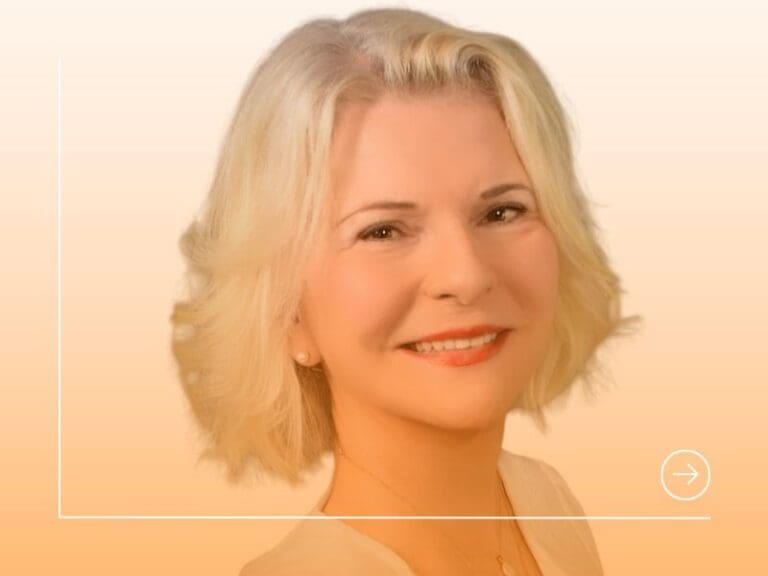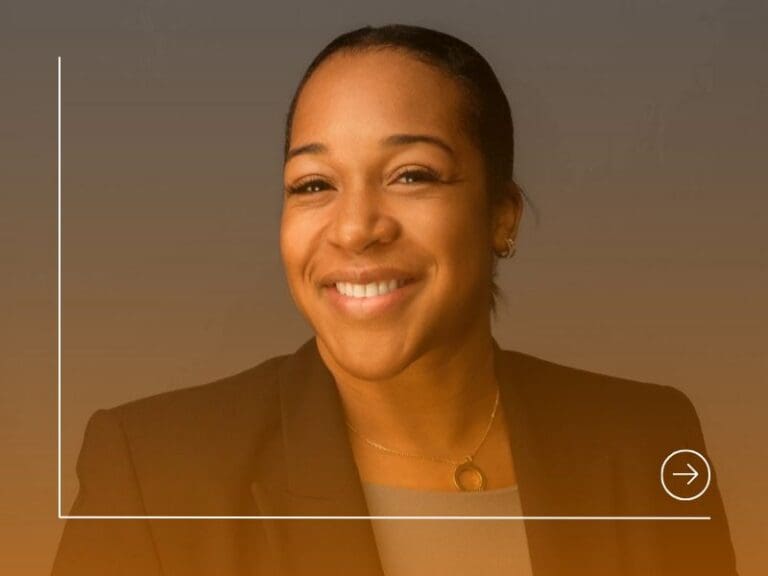

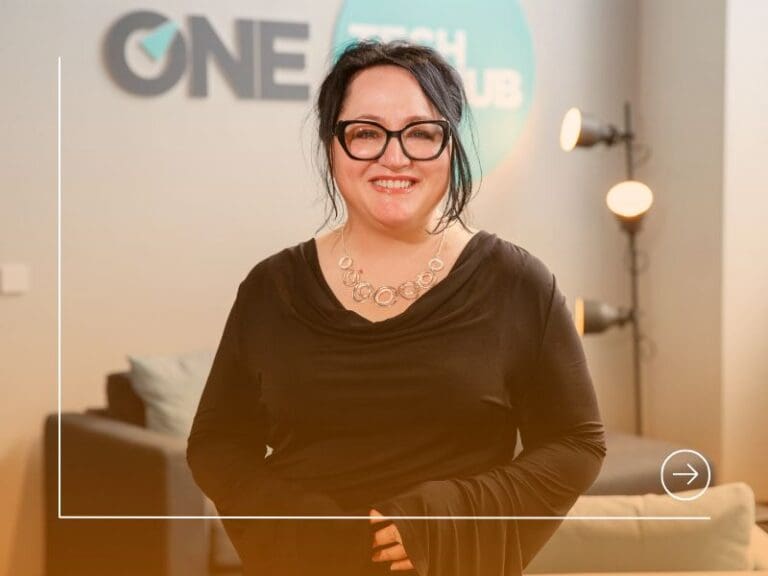
Jennifer Forbes Iannolo is the VP of Business Acceleration at CodeBase, and a globally recognised expert in entrepreneurship development and founder ecosystems.
A tech pioneer, she co-created the world’s first food podcast channel in 2006, helping to shape early digital media.
As the founder of Imperia Global, Jennifer has spent the past decade guiding women founders through growth and scale with a focus on mindset, resilience, and agility. Her private startup clients have included Grammy nominees, global pitch competition winners, and members of Forbes 30 Under 30. Her work supporting scaling founders has reached six continents, and she has shared those insights at the United Nations, Harvard University, and the U.S. Department of State. She is currently an expert reviewer for the Black*Ambition Prize, created by Pharrell Williams, and has been featured in media including Bloomberg Businessweek and the Times of India.
Jennifer’s roots in Scotland run deep, as her mother was born and raised in Beauly. Now based in Aberdeen, where she was the first Entrepreneur in Residence at ONE Tech Hub, Jennifer is focused on building intelligent systems that support founder growth and long-term impact. Her work blends operational clarity with global insight, helping to strengthen Scotland’s entrepreneurial landscape with strategic depth and sustainable acceleration.
How did you land your current role? Was it planned?
This might sound like the intro to a comedy bit, but a funny thing happened on the way to my future: I was in the midst of writing my PhD proposal for the University of Aberdeen when I spotted a CodeBase job posting on LinkedIn. I’d been following their development since the Techscaler programme was announced, because at the time I was in Aberdeen running a summer programme for women founders through Imperia Global, my incubator. I even met with the early team during that time (most of whom were here to greet me on my first day!).
As a serial entrepreneur, it’s rare to see your actual skill set so clearly reflected in a job description for someone else’s creation, but that was absolutely the case here, so I threw my hat in the ring. After 35 years in NYC, I packed up my life, moved across the pond, and started at CodeBase – all within the span of a month.
What are the key roles in your field of work, and why did you choose your current expertise?
The most important part of my role in Business Acceleration is to ensure founders have what they need to develop an idea and get it to the moment of lift (scaled growth). The second is to examine how we look at that from an ecosystem perspective (how it fits with all the other moving parts), including funding and international development, and how we can collaborate with other ecosystems around the globe to develop best practices.
I have a deep, personal commitment to ensuring the brightest minds we have – the ones at the bleeding edge – have support and access to create the future we can’t even see yet.
As for my expertise, it chose me first. I started my first business when I was eight years old, and my first grown-up one in college in 1992. At that time, there were no incubators or accelerators and “entrepreneurship” seemed like a nice way to label “not getting a job.” So I’ve seen the complete evolution of the entrepreneurial ecosystem, along with the gaps and obstacles that founders still face today. Closing those gaps is the unrelenting puzzle that occupies my brain most of the time.
Did you (or do you) have a role model in tech or business in general?
I’ve had many, but people who inspire me most are those continuously working at the bleeding edge I mentioned above – they live in the future we can’t see because they are busy creating it. My work became dedicated to that kind of visionary human, and creating the support systems to help them thrive, because if we build for them, we ultimately build for everyone.
There are obvious names like Steve Jobs and Sara Blakely, but there is genius in every field. A personal role model for me was the late Chef Charlie Trotter, who redefined modern cuisine, but was still happy to make time to talk with me about philosophy and economics – then gifted me his entire cookbook collection. It is a very rare individual who combines genius with generosity and humanity (I’d put Sara Blakely in this category as well).
What are you most proud of in your career, so far?
I used to say it was all about pioneering – about being the first. At university, I hosted one of the earliest conferences on entrepreneurship and social responsibility (1994) and went on to co-create the world’s first food podcast channel (2006).
Now, however, I am most proud of what I’ve helped to catalyse in others: Every one of my food media interns has gone on to a stellar career. There are founders I’ve coached through scale who have exited, won global pitch competitions, been named to Forbes 30 Under 30 and the Obama Fellowship, and discovered a new level of inner fire that helps them bring their massive visions to life. This is where the real prize is for me, and what I’m most proud to leave behind.
What does an average work day look like for you?
It varies a lot. My team is one of the biggest at CodeBase, covering international work, accelerator programming, and mentorship, so there are many moving parts. In a one-month span I’ll be in Edinburgh several times for team and government meetings, then off to Slush in Finland for investor and business development relations, then Greece for an EU work group on deep tech ecosystems. It is deliciously challenging, and never boring! I’m empowered to stay in founder-mode to get things done, so it’s the best of both worlds for me.
Are there any specific skills or traits that you notice companies look for when you’re searching for roles in your field?
I think it requires the ability to look at everything from 100,000 feet to see the whole ecosystem – how all the moving parts connect – while still being able to get into the details and spot what needs improving on the ground. Zooming in and out this way is essential to understand how to move from theory to practice in a way that makes sense at the executional level. Operationalising a vision is hard to do well, but when it works, it feels like magic.
Has anyone ever tried to stop you from learning and developing in your professional life, or have you found the tech sector supportive?
The tech sector has always been incredibly supportive. I realise this is not the usual experience for women in tech, but I think growing up with 5 brothers had me wired a bit differently. It’s actually what led me to the work I’ve done with women founders at Imperia Global, my mindset incubator, because I began to see the differences that make the path more challenging for us, and was compelled to create a shift in the world for women founders – one that supports them effectively.
In other realms of my career, there have been some who tried to block my development, but I’ll tell you a secret: My DNA is half Scottish Highlander and half Southern Italian – I can hold a grudge for multiple lifetimes. My way of satisfying that grudge, however, is to shift it from negativity to focusing on building excellence. No one can argue with excellence.
Have you ever faced insecurities and anxieties during your career, and how did you overcome them?
I think it’s a rare human who hasn’t. However, mindset shifts and visualisation are incredibly powerful tools to help us overcome those feelings. Sometimes it’s referred to as “fake it ‘til you make it,” but it’s less about faking it and more about embodying the characteristics required to play at the level you seek. I border on equal parts introvert/extrovert, so I needed to learn how to work a room and comfortably interact with other humans. I used to watch my brother do it, and he was greeted like the mayor. What stood out was how he made people feel seen and good about themselves, so I started modelling his behaviour.
Entering the world of work can be daunting. Do you have any words of advice for anyone feeling overwhelmed?
The first month will always feel completely upside-down. This holds true for any role, at any stage of your career. You are learning a new language in a new world, because every company’s culture is different. Prepare yourself to accept the overwhelm as part of the adaptation to the new place of work and allow yourself some grace. No one gets it right the first day – or month – and a career is a process of evolution over a long arc of time.
What advice would you give other women wanting to reach their career goals in technology?
Find your champions as soon as possible. These are the people who will ensure you have access to the conversations, rooms, and tables that will propel you forward.
Show up with a sense of curiosity and accountability. What makes it easier to find champions is showing up with a mindset of operating beyond your own sphere of work, taking in the big picture and knowing how your talents fit within it. Instead of waiting for instructions, be proactive and show some moxie! You might not always get a win, but good managers will begin to know you. Curiosity to seek out advice, to learn, to observe, will almost always be welcomed (and if not, you’re in the wrong environment). This is a way to be seen and find mentorship.
Ask for what you want. This can sound scary, but it’s all in the framing of the question. If you want to level up in your career, ask for advice on specific pieces of your project so the development is integrated into your work. This curiosity and accountability (see what I did there?) increases your value to a team and the company as a whole.