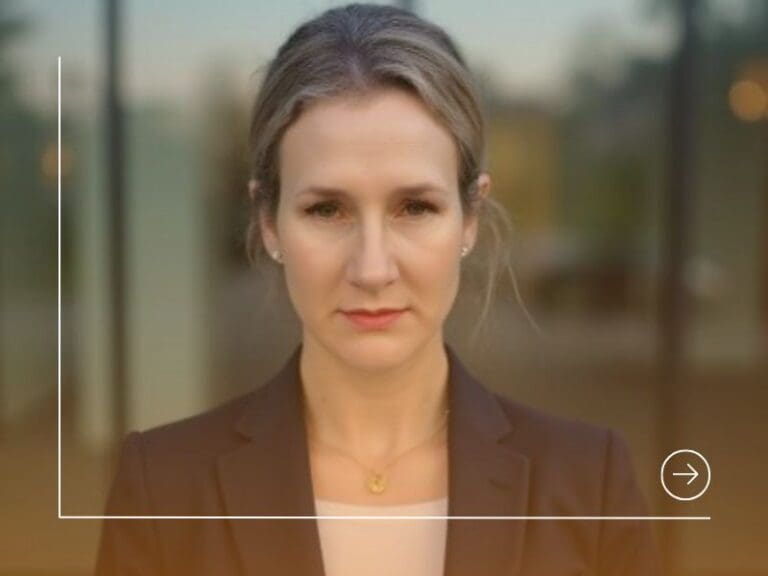


Emily Rosenorn-Lanng is CEO of Cyber Innovations Ltd, a Bournemouth University spin-out building human-centred cyber resilience.
Trained in psychology and quantitative research, she entered cybersecurity through a curiosity about how people think and make decisions under pressure. Through Innovate UK’s CyberASAP programme, she co-developed CyGamBIT and went on to create Cyber First Aid, integrating psychological resilience with incident response. Emily believes meaningful careers emerge where genuine interest meets existing strengths, and that you don’t need to start in tech to shape it.
How did you land your current role? Was it planned?
It was not mapped out in advance.
My background is in psychology and quantitative research, and for many years I worked in evaluation across complex public systems. What consistently fascinated me was how people make decisions under pressure. That curiosity gradually intersected with cybersecurity.
Through Innovate UK’s CyberASAP programme, research became product, and product became a Bournemouth University spin-out. Cyber Innovations grew from that convergence. It felt less like a dramatic pivot and more like applying what I already knew in a new environment.
Careers often look intentional in hindsight. At the time, they rarely feel that tidy.
What are the key roles in your field of work, and why did you choose your current expertise?
Cybersecurity is broader than most people realise. There are technical engineers, threat analysts and incident responders, but there are also behavioural scientists, risk strategists, designers, educators and policy specialists.
I chose to focus on the human layer. My expertise sits in understanding behaviour, stress, decision-making and systems. When incidents occur, technology does not respond on its own. People do. That is where my skills are most useful.
I did not choose cybersecurity because I wanted to become technical. I chose it because it needed psychological insight.
What are you most proud of in your career so far?
Creating Cyber First Aid.
It integrates psychological resilience with technical incident response in a way that feels both academically grounded and practically useful. It moves beyond the narrative of people being the “weak link” and instead equips them to respond effectively under pressure.
I am also proud of stepping into leadership in a technical space without abandoning my background. I did not retrain into something else. I expanded what I already knew.
What does an average work day look like for you?
There is no real average day, which I rather enjoy.
Some days are analytical: reviewing data, refining models, thinking carefully about how theory translates into tools. Other days involve strategic discussions, partnerships, or shaping the commercial direction of the company.
A large part of my role involves translation, moving between research and implementation, between academic language and operational reality.
And, like many founders balancing multiple worlds, I have developed a steady and respectful reliance on coffee.
Are there any specific skills or traits that companies look for in your field?
Beyond technical competence, clarity of thinking is highly valued.
The ability to analyse complex information, communicate risk clearly, and remain calm under pressure matters enormously. In human-centred cybersecurity, emotional intelligence and systems thinking are just as important as technical skill.
Adaptability is increasingly important. The threat landscape evolves quickly, and so must the people working within it.
Quiet competence is underrated in high-pressure environments.
Has anyone ever tried to stop you from learning and developing in your professional life, or have you found the tech sector supportive?
Yes, I have experienced doubt.
Coming from a psychology and research background into cybersecurity, I encountered scepticism, particularly within academic environments. Some questioned whether I “fit” the field. The challenge was less about capability and more about perception.
I learned to channel that doubt rather than internalise it. It sharpened my thinking and strengthened my resolve. It also taught me something valuable: there is a difference between feedback that improves your work and criticism that reflects discomfort with you not fitting a stereotype.
Interestingly, within the tech sector itself, I have largely found the opposite. I have been welcomed and supported. That contrast reinforced my belief that diverse expertise is not a weakness in technology. It is an asset.
Those early challenges ultimately became fuel rather than friction.
Have you ever faced insecurities and anxieties during your career, and how did you overcome them?
Yes.
Moving into a founder role required a different kind of confidence. It meant stepping into commercial conversations and making visible decisions in real time.
I learned to reframe discomfort. If I feel slightly outside my comfort zone, it usually means I am growing. The important thing is remembering that the zone adapts. What once felt daunting eventually becomes normal.
I still feel stretched at times. I just no longer interpret that feeling as a sign that I do not belong.
Entering the world of work can be daunting. Do you have any words of advice for anyone feeling overwhelmed?
It is normal to feel overwhelmed.
Early careers can feel like a performance of certainty. In reality, most people are developing quietly behind the scenes. Focus on building depth. Learn how to think well, how to analyse clearly, and how to communicate effectively.
Confidence builds gradually through competence, not comparison.
What advice would you give other women wanting to reach their career goals in technology?
Start by being honest about what genuinely interests you.
Technology is broad. It includes engineering, but it also includes behaviour, ethics, design, risk, communication, strategy and education. You do not need to mould yourself into a single version of what “someone in tech” looks like. Instead, look for the intersection between what energises you and what you are already good at. That alignment creates confidence that lasts.
Do not wait until you feel entirely ready. Waiting for certainty can quietly become hesitation. If you are outside your comfort zone, you are probably moving in the right direction. The key thing to remember is that the comfort zone adapts. What feels intimidating now will eventually feel ordinary.
Also, resist comparison. Careers in technology often appear fast-paced and linear from the outside. In reality, most people are learning in real time. Focus on developing depth in your thinking and clarity in your communication. Those skills travel across roles, sectors and stages of your career.
And finally, allow yourself to evolve. The work you begin with may not be the work you finish with. That is not failure. It is growth.