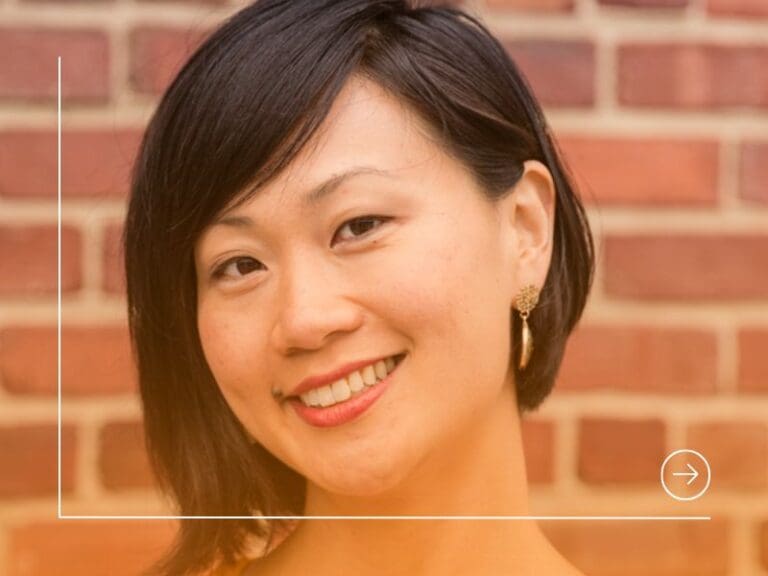


Dr Chandrashekar, a Globant Women in Tech awardee and member of the global Women in AI Ethics community, is passionate about creating accessible technology through inclusive design.
She advocates for accessible and equitable AI through leadership positions in national and international standards-making and governance bodies, and over the course of her career she has led projects across non-profit, academia and tech. In her current role as global accessibility lead at D2L, Dr Chandrashekar focuses on building an inclusive edtech ecosystem to promote equity in education globally for D2L’s 21 million learners across 40 countries.
How did you land your current role? Was it planned?
Yes, I transitioned intentionally from academia into the edtech industry. As D2L’s accessibility lead, I have a mission to make inclusive design work as successfully in the industry as I have seen it work in academia and nonprofit sectors. Inclusive design is about designing iteratively with a focus on the edge-case users, who are usually users with disabilities or other similar constraints. I wanted to be at the forefront of inclusive learning, helping to make education and training accessible for all learners.
What are the key roles in your field of work, and why did you choose your current expertise?
Given my long stint in tech and my experience in academia, I could have chosen one of many roles in the edtech field on the product, sales or customer relations side. However, I chose to stay with accessibility because I find making tech work for everyone isn’t on the radar of all tech companies. There is a need to influence from within the industry by providing evidence of the benefits.
I love advocating the larger impact of inclusive design because what we build to meet the needs of those with a permanent disability also helps others who face that constraint temporarily or situationally. As a leader, I am always inclined to help others do their work better. This mindset automatically lends itself to servant leadership, which I thoroughly enjoy.
Did you (or do you) have a role model in tech or business in general?
Dr. Jutta Treviranus, a global leader in inclusive tech, has been my role model and mentor for two decades. She has supported and guided me throughout my career, from my work at the Inclusive Design Research Centre, to my current role as the vice chair of Accessibility Standards Canada’s AI and ICT standards committee.
I find Jutta’s empathy and her practice of inclusive design fascinating to emulate. I pay all that forward by mentoring immigrant women in tech from different cultures with diverse abilities.
What are you most proud of in your career, so far?
I am filled with gratitude to observe how accessibility is so deeply rooted at D2L. Across tech, non-profit and academia, my role had always been to inspire and enable people to create more accessible, equitable outcomes. At D2L, I ensure that our products and services align with the company’s business purpose of reaching every learner, regardless of their age or abilities. I promote and demonstrate the idea that empathy is not necessarily at odds with profit and ‘doing well by doing good’ is possible for a tech company. As a leader interested equally in business and tech, this does make me proud.
What does an average workday look like for you?
My workday varies, but my core tasks range from advising the accessibility team on day-to-day support requests, to ensuring that technology partnerships pass minimum accessibility requirements. I also frequently advise on the applicability of global accessibility standards and facilitate accessibility webinars, conferences, blogs and media articles. While my role consists of a highly diverse and multifaceted set of responsibilities, accessibility remains at the heart of them all.
Are there any specific skills or traits that you notice companies look for when you’re searching for roles in your field?
When searching for roles in the field of accessibility, companies are increasingly looking for certifications. The International Association of Accessibility Professionals (IAAP) is a body dedicated to providing exactly that. As the vice chair of IAAP’s Global Leadership Council (and imminent chair for 2 years from January 2026), I work on promoting certifications globally.
Personally, I would recommend that companies look for empathy towards other human beings as the key trait while recruiting for accessibility roles.
Have you ever faced insecurities and anxieties during your career, and how did you overcome them?
As an immigrant woman of colour who migrated and moved careers in a new country, I have certainly had my moments of uncertainty and lack of confidence. I have been fortunate to have a strong support group who helped me find my feet again. I owe a lot to my mentors, and make an earnest effort to support other women in tech and beyond so that they can succeed.
What is your take on the role of accessibility in AI?
Digital accessibility becomes increasingly critical with the increasing adoption of emerging technologies. With AI thrown into the mix, both the opportunities and risks for people with disabilities increase exponentially. When AI-based tech becomes inaccessible, these groups get left behind. This is something all tech suppliers must keep in mind when they design and build.
It is important to remember that “disability doesn’t discriminate”. It could become anyone’s reality at any time. Inclusion is about removing the multiple lenses we tend to wear when we look at people, and to be able to recognise the authentic human beings we all are.
What advice would you give other women wanting to reach their career goals in technology?
Do what makes you happy. All along my life and career, I have used this principle as my North Star. It helps me make decisions and guides my path. At work, it helps me be joyously productive, remain motivated and stay true to myself and my values. Of course, I am privileged to work with leaders who put others first and nurture a culture where we can bring our authentic selves to work. I try to be such a leader.
Inclusive design is a philosophy, a process, a journey. To me, it is a way of life which continuously transforms how I think, work and live and leads me into a future full of possibilities for further success. I love sharing my experience with other women in tech to inspire them to do better than they imagined.